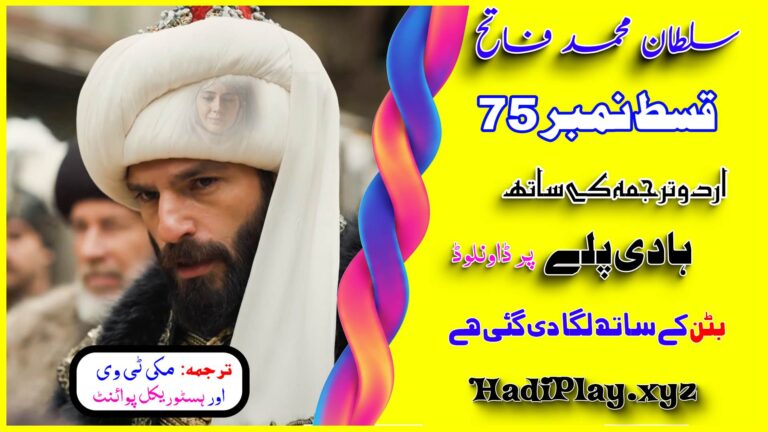
Sultan Muhammad Fatih Episode 65: The Final Strategic Masterclass and the Echoes of Prophecy
Sultan Muhammad Fatih Episode 65 is not just another chapter in a historical drama; it is a profound exploration of the transition between the medieval and modern worlds. As the siege of Constantinople enters its most grueling and decisive phase, the narrative shifts from mere battlefield tactics to a complex study of leadership, engineering, and spiritual fortitude. With the high-quality Urdu subtitles provided by Urdu Bolo, every nuanced decree from the Sultan and every desperate cry from the Byzantine defenders is delivered with the weight of history behind it.
The Architectural Genius of the Siege
One of the most impressive aspects of Episode 65 is the focus on Sultan Mehmed II’s obsession with technological superiority. He is portrayed not just as a conqueror, but as an engineer of destiny. The episode goes into great detail about the positioning of the “Shahi” cannons and the mathematical precision required to breach walls that had stood for a thousand years.
We see the Sultan personally inspecting the siege engines, discussing ballistics with his engineers, and adjusting the angle of attack. This focus on “Fann-e-Harb” (the art of war) shows that the Ottoman victory was not just a result of numbers, but of a superior intellectual approach to warfare.
🔹 Episode Insight
Episode 65 highlights that true power lies in the fusion of deep faith and cutting-edge science.
Mehmed II: The Solitary Leader
In this episode, we witness the psychological burden placed on the young Sultan. While his soldiers see a fearless leader, the audience sees a man carrying the weight of a centuries-old prophecy. Episode 65 explores his sleepless nights and his intense consultations with his spiritual mentor, Akshamsaddin.
The Sultan’s internal conflict—balancing his mercy with the necessity of the conquest—provides some of the most moving scenes in the series. He is seen as a man who is willing to sacrifice his own comfort and safety to ensure that the standards of Islam fly over the city that was promised to his ancestors.
The Golden Horn: A Tactical Miracle
A major highlight of this chapter is the focus on the naval front. The Sultan’s plan to transport ships over land into the Golden Horn is depicted with incredible cinematic detail. Episode 65 shows the sheer physical labor and the strategic shock this move caused the Byzantine navy.
By bypassing the massive chain that blocked the harbor, Mehmed II effectively split the defenders’ attention. The desperation in the Byzantine camp is palpable as they realize that the sea, which was once their greatest shield, has now become a gateway for their downfall.
🔹 Story Focus
When the path is blocked by chains, a true leader builds a path over the mountains.
The Crumbling Byzantine Resistance
Inside the city of Constantinople, the atmosphere is one of fading hope and rising internal strife. Episode 65 does an excellent job of showing the perspective of Constantine XI and his advisors. We see a city divided—not just by the walls, but by different ideologies on how to handle the impending defeat.
The dialogue between the Byzantine officials and the foreign mercenaries highlights the lack of unity compared to the disciplined Ottoman ranks. This contrast reinforces the theme that a kingdom falls from within before it is conquered from without.
The Ethical Foundations of Conquest
Throughout the chaos of the siege, Episode 65 constantly reminds the viewer of the Ottoman code of honor. The Sultan issues strict orders regarding the protection of non-combatants and the preservation of holy sites within the city once it falls. This ethical layer is crucial; it shows that Mehmed’s goal was “Fetih” (opening for justice) rather than simple “Istila” (occupation).
His interactions with his commanders emphasize that every drop of blood spilled must have a purpose, and that the ultimate goal is to build a civilization where all faiths can coexist under the umbrella of Ottoman justice.
🔹 Thematic Note
The sword wins the territory, but the character wins the hearts of the people.
Atmospheric Brilliance and Cinematic Pacing
The pacing of Episode 65 is deliberate and tense. The cinematography uses the contrast between the fire of the Ottoman cannons and the dark, somber hallways of the Byzantine palaces to create a visual metaphor for the shifting tides of power. The background score, featuring traditional Ottoman military rhythms (Mehter), elevates the heartbeat of the viewer, making them feel like a participant in the history unfolding on screen.
Urdu Subtitles by Urdu Bolo: Precision in Every Decree
The Urdu subtitles by Urdu Bolo are a vital part of the experience. They capture the specific Ottoman courtly language (Lisān-i ‘Osmāni) and translate it into a rich, formal Urdu that maintains the dignity of the characters. Whether it is a heated debate in the Divan or a quiet prayer in the Sultan’s tent, the translation ensures that no emotional or historical nuance is lost.
Why Episode 65 is a Historic Landmark
This episode matters because it sets the stage for the final resolution. It provides the “Strategic Breakthrough” that the previous sixty-four episodes were building toward. It is a tribute to the human spirit’s ability to achieve the impossible through discipline, vision, and an unshakeable belief in a higher purpose.
🔹 Story Progression Note
Episode 65 is the final breath before the leap—the moment where history pauses before changing forever.
Frequently Asked Questions (FAQs)
🔹 Q1: Does the Sultan use any new weapons in Episode 65? Yes, the episode focuses on the improved accuracy of the giant cannons and the use of specialized siege towers that were revolutionary for that era.
🔹 Q2: How does the Sultan handle dissent among his advisors in this episode? Mehmed II uses a combination of iron-willed authority and visionary logic to convince the skeptics that the siege must continue at all costs.
🔹 Q3: Are there any major naval battles in Episode 65? The focus is more on the strategic maneuver of the ships into the Golden Horn, which serves as a psychological and tactical naval victory.
🔹 Q4: How does Urdu Bolo handle the historical terminology? Urdu Bolo provides accurate translations for military ranks and historical titles, ensuring that the viewer understands the hierarchy and the gravity of the commands.