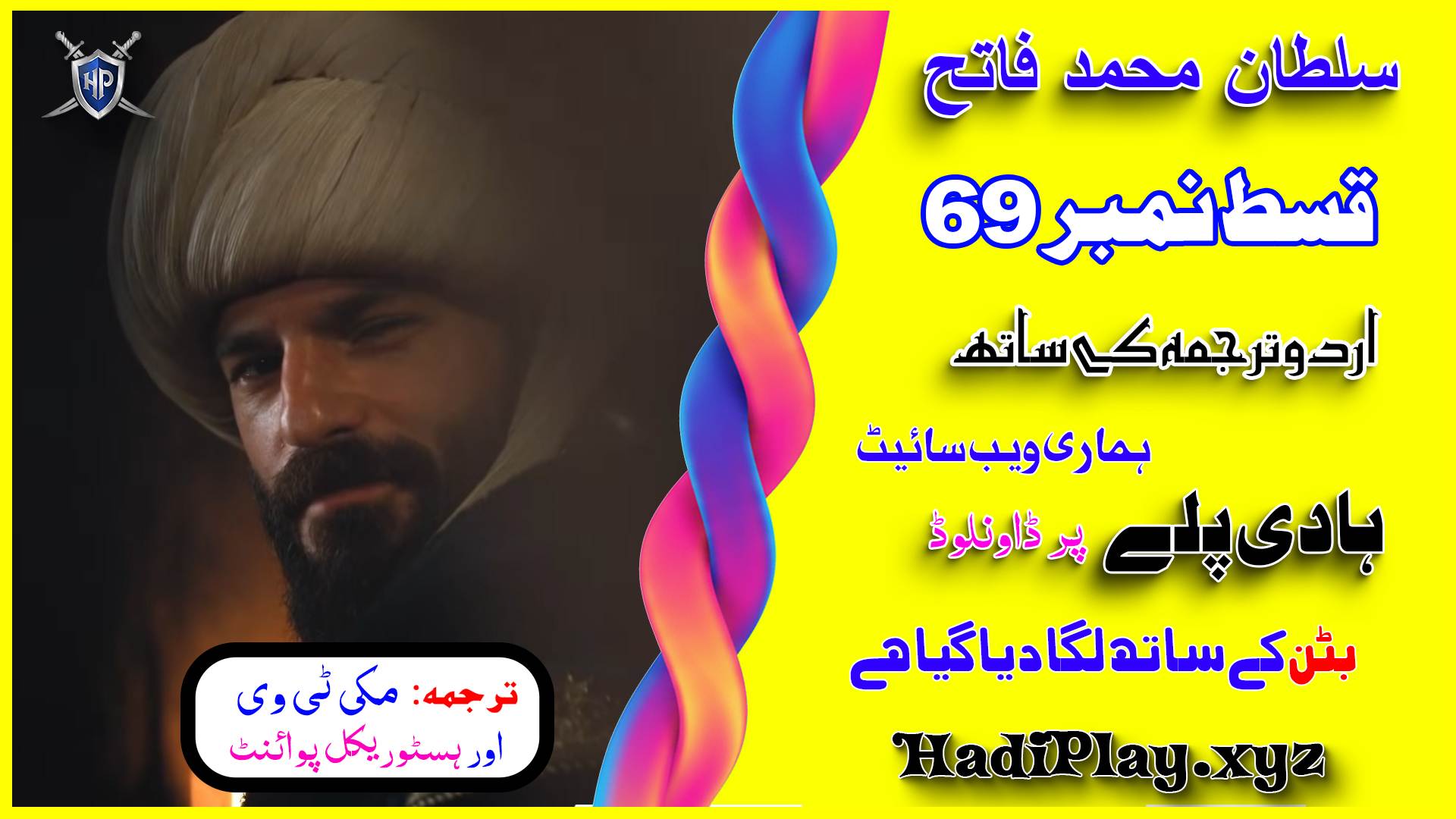
Sultan Muhammad Fatih Episode 69: The Lion of the East and the European Storm
Sultan Muhammad Fatih Episode 69 is a masterclass in 15th-century geopolitics and military psychology. As Istanbul begins to flourish under Ottoman rule, the Western powers realize that the “Conqueror” does not intend to stop at the Bosphorus. The narrative shifts toward the Balkan frontier, where the clash between the Ottoman Empire and the Hungarian-Wallachian alliance reaches a fever pitch. With professional Urdu subtitles provided by Urdu Bolo, every sophisticated diplomatic maneuver and tactical decree is delivered with the linguistic depth and historical weight this epic saga demands.
The Belgrade Vision: Securing the Danube
Episode 69 opens with Sultan Mehmed II focusing his gaze on Belgrade, the “Gate of Middle Europe.” The narrative brilliantly portrays the Sultan’s realization that to protect Istanbul, he must control the Danube River. The atmosphere is one of high-stakes military planning, as the Sultan coordinates with his engineers to build a river fleet capable of challenging the Hungarian defenses.
The episode goes into great detail about the “Logistics of Conquest.” We see the Sultan overseeing the production of even larger cannons and the mobilization of the Akıncı (Raider) corps. This focus on “Total War” preparation highlights that Fatih’s genius was as much about supply lines and technology as it was about bravery on the field.
Mehmed II: The Philosopher King in the War Room
In this chapter, we see the duality of the Sultan’s character. Episode 69 showcases his interactions with Italian artists and Greek scholars whom he has invited to his court. Even as he plans a massive military campaign, he is seen discussing the works of Homer and the strategies of Alexander the Great.
His interactions with his inner circle, specifically Akshamsaddin, provide a spiritual anchor. They discuss the concept of “Nizam-ı Alem” (The Order of the World) and the moral responsibility of a world leader. His character evolution in this episode establishes him as a ruler who seeks not just territory, but the creation of a universal civilization.
The Wallachian Shadow: Vlad’s Defiance
A major highlight of Episode 69 is the deepening conflict with Vlad Tepes (The Impaler). The narrative explores the psychological warfare used by Vlad to terrorize the Ottoman borders. This subplot adds a layer of “Dark Realism” to the show, as the Sultan is forced to deal with an enemy who uses fear as his primary weapon.
The dialogue between the Sultan and his envoys returning from Wallachia is particularly intense. It highlights the clash between the Sultan’s vision of law and order versus Vlad’s reign of terror. This confrontation sets the stage for one of the most personal and brutal campaigns in Ottoman history.
🔹 Story Insight
A Sultan does not just fight armies; he fights the darkness that seeks to consume the borders of his justice.
The Social Renaissance: The Pulse of Istanbul
While the drums of war beat in the distance, Episode 69 continues to show the “Golden Age” unfolding in the capital. We see the completion of new madrasas (universities) and the arrival of trade caravans from the Silk Road. The Sultan’s decrees regarding the protection of non-Muslim merchants are shown to be the catalyst for the city’s economic boom.
The cinematography uses the vibrant colors of the Grand Bazaar and the serene architecture of the newly built mosques to create a visual metaphor for the “Ottoman Peace” (Pax Ottomana). The sound design—blending the calls of the muezzin with the rhythmic hammers of the shipyard—creates an immersive atmosphere of a superpower in the making.
🔹 Thematic Note
The sword captures the land, but the market and the school are the pillars that hold up the heavens of the Empire.
Urdu Bolo: Excellence in Historical Translation
The Urdu subtitles for Episode 69 on Urdu Bolo are meticulously crafted to preserve the “Imperial Eloquence” of the Ottoman court. We ensure that the formal titles, the theological debates, and the complex military commands are translated into Urdu that resonates with the dignity of the era. This ensures that you don’t just watch history; you feel the weight of the Sultan’s words.
Why Episode 69 is a Narrative Milestone
This episode matters because it officially begins the “Long War” for Europe. It proves that the conquest of Constantinople was not the end, but the catalyst for a global shift in power. It is a landmark chapter that leaves the viewer inspired by the Sultan’s multi-dimensional genius—managing a cultural renaissance in his capital while preparing for the greatest military challenge of his life.
🔹 Story Progression Note
Episode 69 is the “Call to Arms”—the moment where the Sultan of Two Continents prepares to cross the final frontier.
Frequently Asked Questions (FAQs)
🔹 Q1: Does the episode feature a major siege? The episode focuses on the massive tactical preparations and the naval buildup on the Danube, setting the stage for the historic Siege of Belgrade in the upcoming chapters.
🔹 Q2: How does the Sultan handle the diplomatic pressure from the Pope? Mehmed II uses a sophisticated “Divide and Conquer” strategy, negotiating with individual Italian city-states to prevent a unified European Crusade.
🔹 Q3: Is there a focus on the Sultan’s scientific inventions in this episode? Yes, the episode features Fatih working with his master founders to design a new type of mortar shell capable of high-angle fire over fortress walls.
🔹 Q4: How does Urdu Bolo handle the translation of the Sultan’s spiritual dialogues? Urdu Bolo provides high-level, poetic Urdu that captures the Sufi influence and the spiritual gravity of the Sultan’s conversations with his mentors.