Sultan Mehmed II: The Conqueror and His Historical Legacy
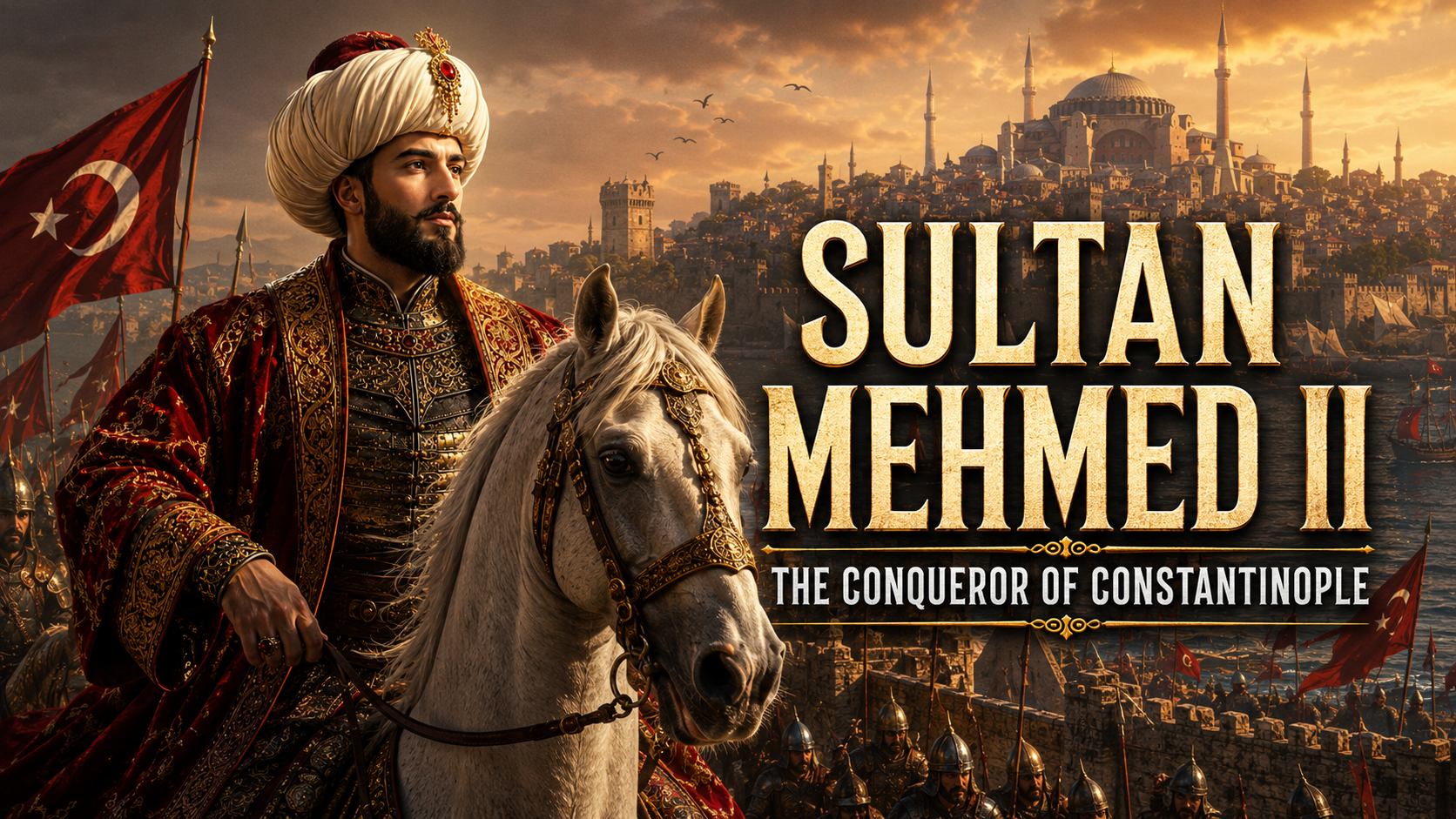
Sultan Mehmed II is one of the most famous rulers in world history. He is remembered as the Ottoman sultan who conquered Constantinople in 1453 and changed the direction of history. Because of this achievement, he became known as “Mehmed the Conqueror.” His life was not only about military success; it was also about vision, learning, leadership, law, architecture, administration, and the transformation of the Ottoman state into a world empire.
Before Mehmed II, the Ottomans were already a rising power in Anatolia and the Balkans. They had strong rulers, disciplined armies, and growing political influence. But the conquest of Constantinople gave the Ottoman Empire a new identity. It connected the empire with a great imperial capital and made the Ottomans one of the most important powers of their time. Mehmed II’s reign marked the beginning of a new era for the Ottoman world.
Early Life of Sultan Mehmed II
Mehmed II was born in 1432. He was the son of Sultan Murad II, one of the important Ottoman rulers before him. From a young age, Mehmed received an education suitable for a future ruler. He studied religion, language, history, literature, military strategy, and state administration. Like many royal children of the period, he was trained not only to rule but also to understand the duties and responsibilities of leadership.
His teachers and advisers played an important role in shaping his mind. Mehmed grew up with a strong interest in knowledge. He was not only a warrior-sultan; he was also known for his curiosity and intelligence. He learned different subjects and showed interest in both Islamic and classical traditions. This educational background helped him become a ruler who valued scholarship, architecture, law, and organized government.
At a young age, Mehmed experienced the pressures of leadership. His father, Murad II, gave him responsibility early, and Mehmed briefly became sultan before his final rule. These early experiences taught him that ruling an empire required patience, discipline, and strong decision-making.
The Ottoman World Before Mehmed II
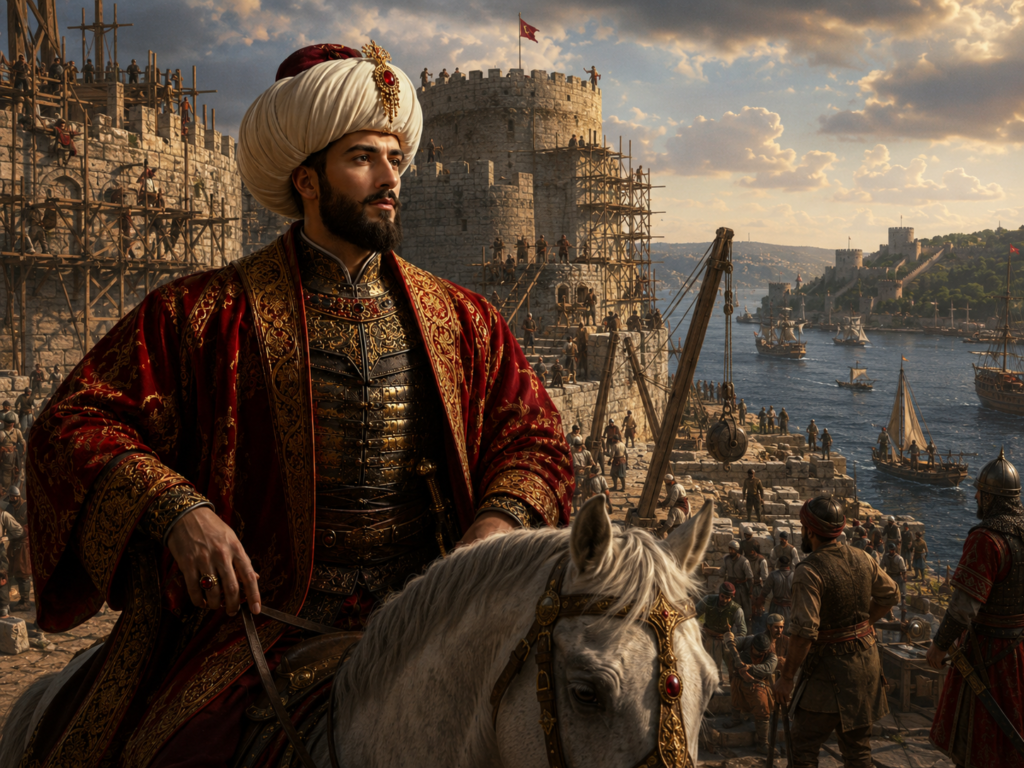
Before Mehmed II became one of history’s most famous rulers, the Ottoman Empire had already grown from a small frontier state into a powerful regional kingdom. The Ottomans controlled large areas in Anatolia and the Balkans. They had strong military traditions and had survived major challenges, including the crisis after the Battle of Ankara in 1402.
However, one major city still stood between the Ottoman lands: Constantinople. The city was the capital of the Byzantine Empire and had great historical, political, and religious importance. It was located between Europe and Asia and controlled important routes between the Black Sea and the Mediterranean.
For the Ottomans, Constantinople was not only a city. It was a strategic key. The Ottoman lands surrounded it, but the city remained outside their control. Many earlier Muslim and Ottoman leaders had tried to capture it, but its powerful walls and strong position made it extremely difficult to conquer.
Mehmed II Becomes Sultan
Mehmed II became sultan in 1451 after the death of his father, Murad II. At that time, some people underestimated him because he was young. But Mehmed quickly showed that he was determined, ambitious, and serious about his goals.
One of his greatest goals was to capture Constantinople. He understood that the city’s conquest would give the Ottoman Empire a strong capital and make his rule unforgettable. He also knew that this task would require careful planning, military strength, engineering, patience, and discipline.
Mehmed did not rush blindly. He prepared carefully. He strengthened his army, studied the city’s defenses, built new fortifications, and planned how to overcome the famous walls of Constantinople. His preparation showed one of his strongest qualities: he combined ambition with strategy.
The Importance of Constantinople
Constantinople was one of the most famous cities in the world. It had been founded as Byzantium and later became the imperial capital of the Roman and Byzantine empires. For centuries, it served as a center of politics, trade, religion, art, and culture.
The city’s location made it extremely valuable. It stood at the meeting point of Europe and Asia and controlled access to important sea routes. Whoever controlled Constantinople could influence trade, military movement, and communication between different regions.
The city was also protected by massive walls. These walls had defended it against many attacks for hundreds of years. Because of this, the conquest of Constantinople was considered one of the most difficult military goals of the medieval world.
For Mehmed II, conquering Constantinople was a way to complete Ottoman control over the region and create a powerful imperial center. It was a political, military, and symbolic goal.
Preparing for the Conquest
Mehmed II prepared carefully for the campaign of 1453. He built Rumeli Hisarı, a fortress on the European side of the Bosporus. This fortress helped control movement through the strait and placed pressure on Constantinople. It showed that Mehmed was serious and that the Ottoman siege would be different from earlier attempts.
He also gathered a large army and used powerful cannons. The use of artillery became one of the important features of the siege. Large cannons were used against the city walls, showing how military technology was changing during this period.
Mehmed also planned naval and land operations. The city was protected not only by walls but also by water. To succeed, the Ottomans needed to pressure Constantinople from different sides. This required organization, engineering, and coordination.
The Siege of Constantinople
The siege of Constantinople began in 1453. Ottoman forces surrounded the city and began attacking its defenses. The defenders fought with determination, but the city was facing a powerful and well-prepared enemy.
The siege was long and difficult. The famous walls of Constantinople were strong, and the defenders used their position carefully. However, Ottoman cannons damaged parts of the walls, and Mehmed continued applying pressure. He understood that persistence was necessary.
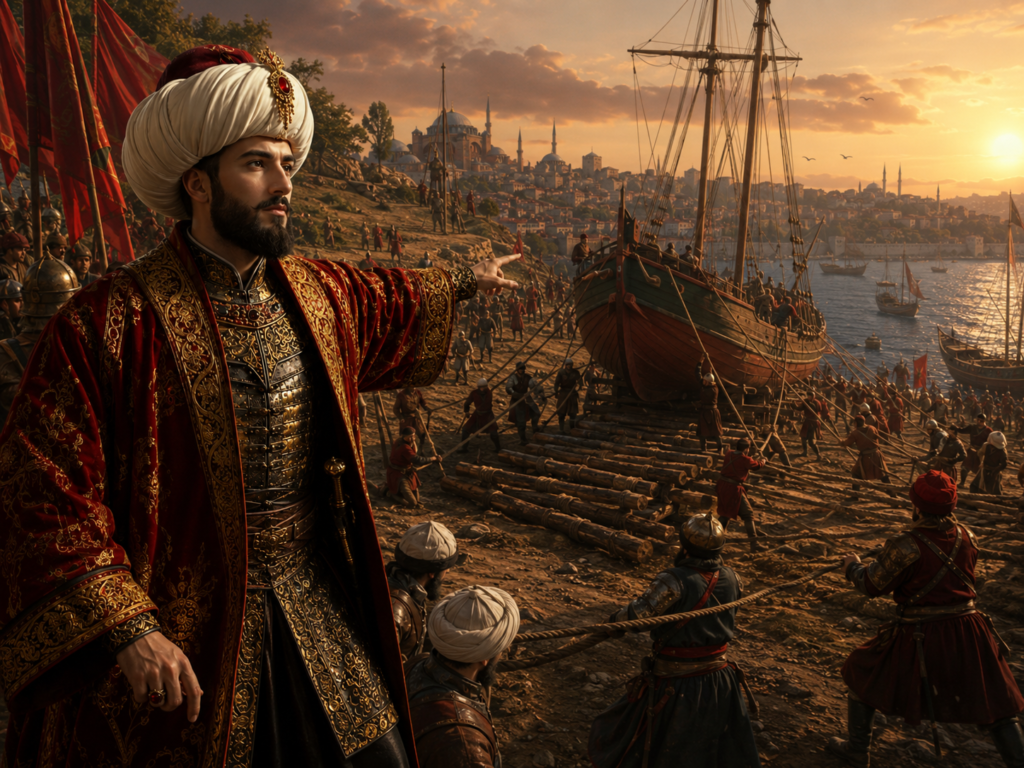
One of the famous moments of the siege was the Ottoman movement of ships overland into the Golden Horn area. This move shocked the defenders and showed Mehmed’s creativity in military planning. It demonstrated that he was willing to use unusual methods to achieve his goals.
After weeks of siege, the city finally fell on 29 May 1453. This event became one of the most famous turning points in world history.
The Conquest and Its Meaning
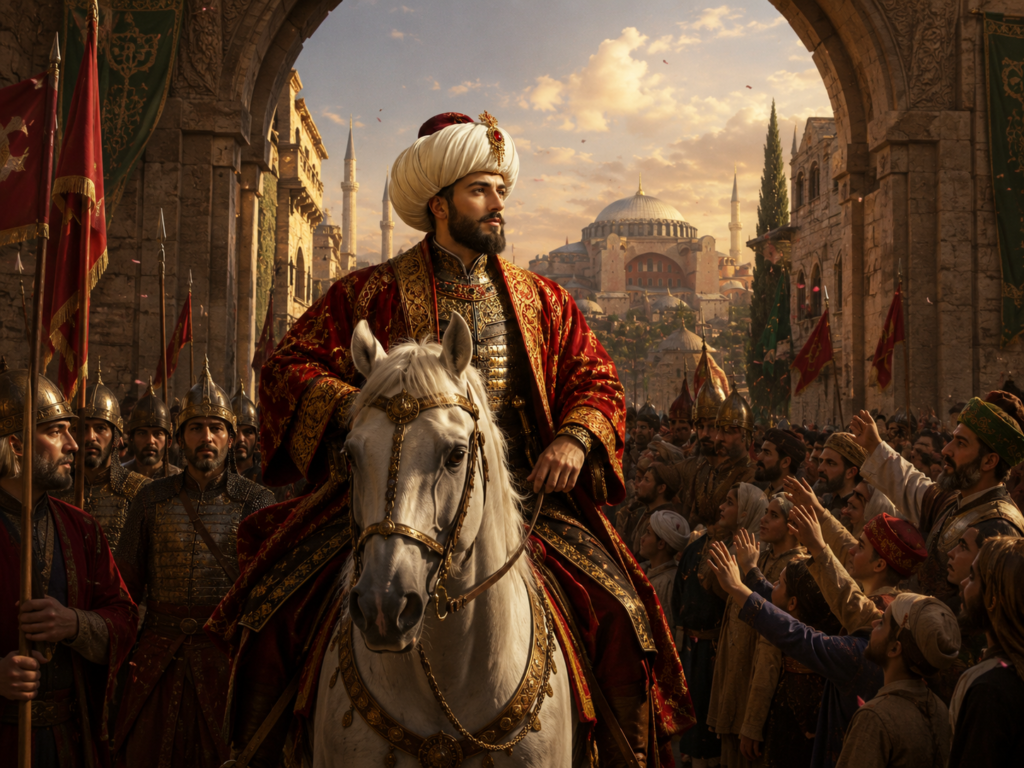
The conquest of Constantinople changed the Ottoman Empire forever. Mehmed II entered the city as a victorious ruler and transformed it into the new center of his empire. The city eventually became known as Istanbul and became one of the greatest capitals in the world.
The fall of Constantinople also marked the end of the Byzantine Empire. This was a major historical moment because the Byzantine state had continued the legacy of the eastern Roman world for many centuries.
For the Ottomans, the conquest gave enormous prestige. Mehmed became known as the Conqueror, and his empire gained a powerful symbol of authority. The city connected the Ottoman rulers with the great imperial traditions of the past.
Rebuilding the City
After the conquest, Mehmed II did not want Constantinople to remain empty or ruined. He wanted it to become a living, prosperous, and powerful capital. He encouraged people from different backgrounds to settle in the city. Muslims, Christians, Jews, merchants, craftsmen, scholars, and officials all became part of the city’s new life.
This policy helped rebuild the population and economy. Markets, homes, religious buildings, public works, and administrative offices became important parts of the city’s renewal.
Mehmed understood that a great empire needed a great capital. He invested in the city and made it the heart of Ottoman politics and culture. Over time, Istanbul became one of the most important cities of the Islamic and Mediterranean world.
Mehmed II as a Lawgiver and Administrator
Mehmed II was not only a conqueror. He was also a lawgiver and administrator. He worked to strengthen the Ottoman state and make government more organized. A large empire could not survive through military power alone. It needed laws, officials, taxation systems, courts, records, and clear authority.
Mehmed helped shape Ottoman administrative traditions. He strengthened the central government and made the authority of the sultan more powerful. He also organized the ruling system in a way that helped later Ottoman rulers maintain control over large territories.
His legal and administrative work helped turn the Ottoman state into a stronger empire. This is one reason why his legacy continued after his death.
Patron of Architecture and Culture
Mehmed II supported architecture, learning, and culture. Under his rule, Istanbul began developing as a center of education and artistic activity. Mosques, schools, markets, and public buildings helped shape the city’s new identity.
One of the most famous building projects connected with Mehmed’s reign was the Fatih Mosque complex. Such complexes were not only places of worship. They often included schools, libraries, hospitals, kitchens, and social services. This reflected the Ottoman idea that public architecture should support society.
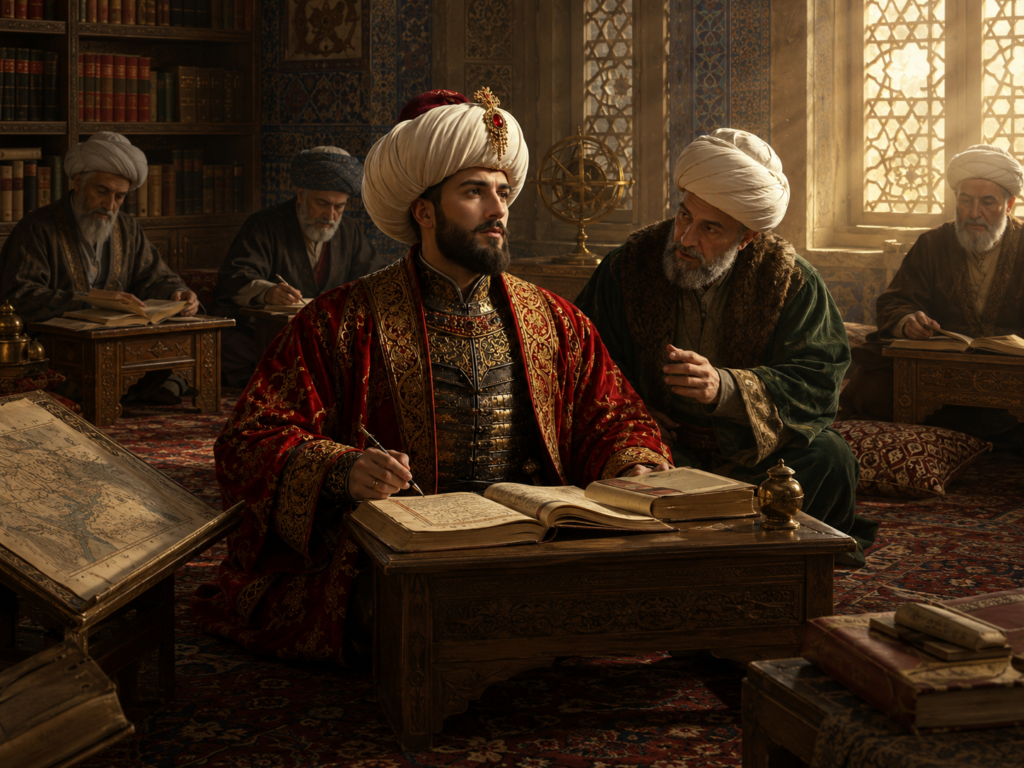
Mehmed also invited scholars, artists, craftsmen, and intellectuals to his court. He was interested in different traditions of knowledge and wanted his capital to become a center of civilization.
Mehmed II and Knowledge
Mehmed II had a strong interest in learning. He respected scholars and encouraged intellectual activity. His court included people from different backgrounds and fields of knowledge. He was interested in history, geography, languages, philosophy, and military science.
This interest in knowledge helped make his rule different from a simple military leadership. Mehmed wanted to present himself as a universal ruler, a leader connected with both Islamic kingship and older imperial traditions.
His curiosity and support for scholarship helped create a richer cultural environment in the Ottoman court. It also helped the empire develop a broader worldview.
Expansion After Constantinople
After the conquest of Constantinople, Mehmed II continued expanding Ottoman power. He campaigned in different regions and strengthened Ottoman control in the Balkans and Anatolia. His goal was to create a secure, centralized, and powerful empire.
He understood that Constantinople could not remain safe if surrounding regions were unstable or controlled by enemies. Therefore, he worked to bring more areas under Ottoman authority.
His campaigns were part of a larger plan to build a strong empire with Istanbul at its center. This expansion helped shape the political map of southeastern Europe and Anatolia.
The Character of Mehmed II
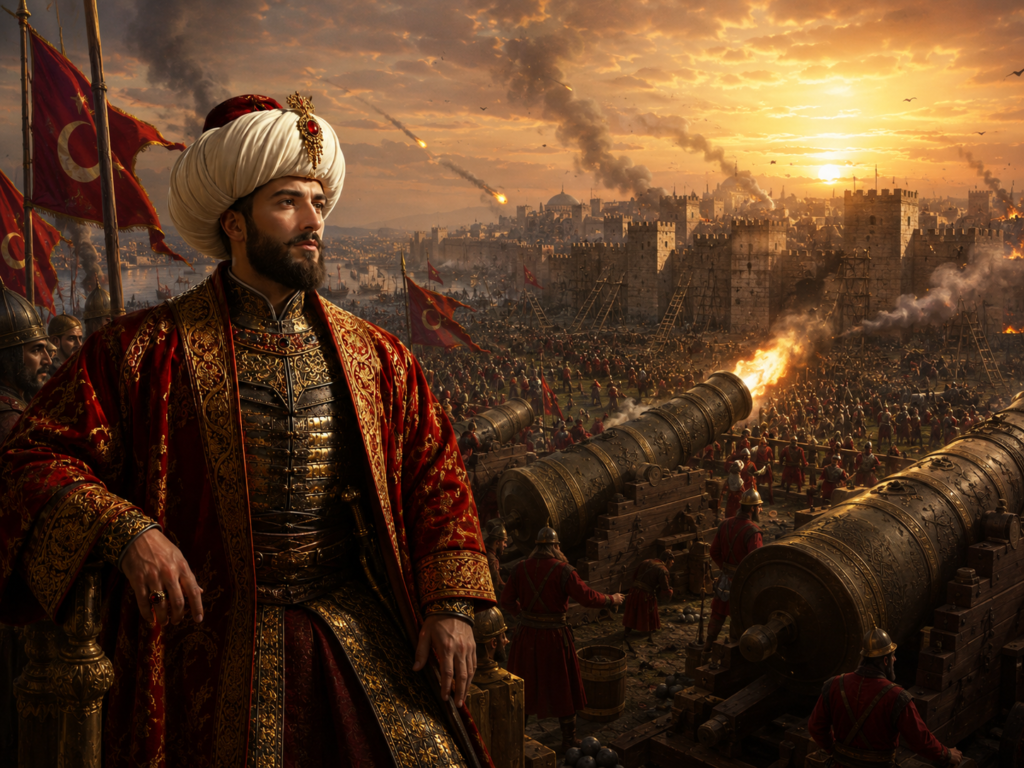
Mehmed II is remembered as intelligent, determined, ambitious, and disciplined. He could be strict, but he also had a broad vision. He understood the importance of military power, but he also respected administration, architecture, law, and scholarship.
His personality combined the qualities of a commander and a statesman. He knew how to plan, how to wait, and how to act decisively when the time came. The conquest of Constantinople required courage, but it also required patience and organization.
History remembers him because he achieved something that many rulers before him had failed to accomplish. But his legacy is larger than one victory. He helped build the structure of a great empire.
Mehmed II’s Legacy in Ottoman History
Mehmed II’s legacy remained central to Ottoman identity. Later sultans looked back to his reign as a model of imperial ambition and success. His conquest gave the Ottomans a capital that remained the center of the empire for centuries.
He also strengthened the idea of the Ottoman ruler as a powerful emperor, not only a regional king. This idea helped shape the political culture of the empire.
His reforms and policies influenced later Ottoman administration. His investment in Istanbul shaped the city’s future. His support for culture and architecture helped define Ottoman civilization.
Why Mehmed II Still Matters Today
Mehmed II still matters because his life connects many important historical themes. His story includes leadership, strategy, urban development, cultural transformation, religious and political change, and the rise of a world empire.
For students of history, Mehmed II shows how one ruler can change the direction of an empire. His success was not based only on courage. It came from preparation, intelligence, organization, and the ability to understand the importance of symbols and institutions.
The conquest of Constantinople remains one of the major turning points in world history. But Mehmed’s importance is also found in what he did after the conquest: rebuilding the city, strengthening the state, supporting culture, and shaping the Ottoman future.
Conclusion
Sultan Mehmed II was one of the greatest rulers of the Ottoman Empire. He is best known for conquering Constantinople in 1453, but his historical legacy is much wider. He was a strategist, administrator, patron of culture, lawgiver, and builder of an imperial capital.
His reign transformed the Ottoman state into a world empire. By capturing Constantinople and turning it into the heart of Ottoman power, he created a political and cultural center that shaped history for centuries.
Mehmed II’s story is not only about a famous conquest. It is about vision, planning, leadership, knowledge, and the ability to build something lasting. That is why he remains one of the most important figures in Turkish, Islamic, and world history.