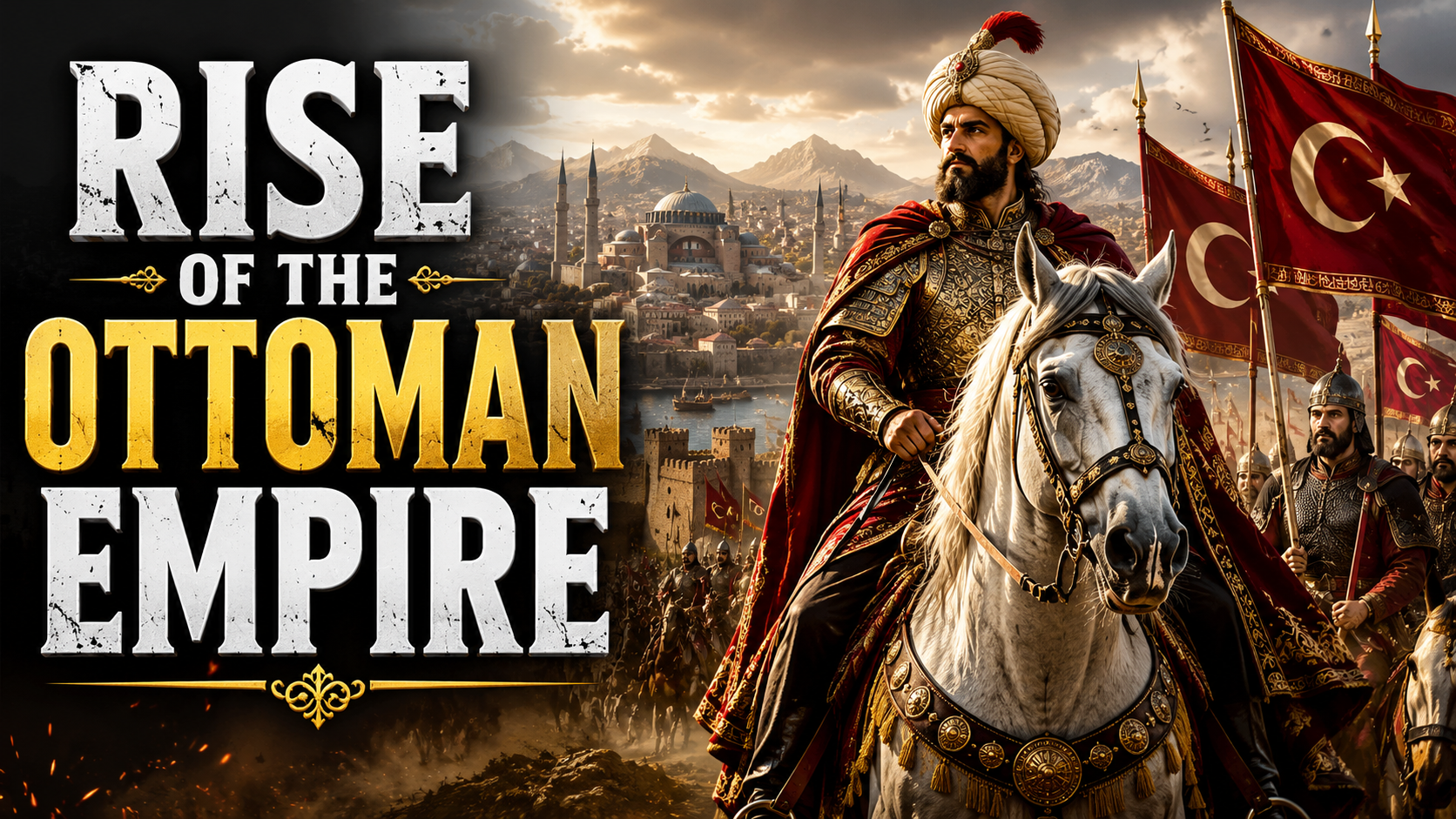
The Rise of the Ottoman Empire: How a Small State Became a Great Power
The rise of the Ottoman Empire is one of the most remarkable stories in world history. It began as a small frontier principality in northwestern Anatolia and gradually became one of the most powerful empires of the medieval and early modern world. For more than six centuries, the Ottomans influenced politics, trade, culture, architecture, military systems, law, and society across Europe, Asia, and Africa.
The Ottoman story is not only about conquest. It is also about leadership, organization, opportunity, patience, and the ability to bring different people under one political system. The early Ottomans were successful because they understood the importance of strategy, local alliances, military discipline, religious identity, and practical governance. Their rise was slow in the beginning, but over time they built a strong foundation that allowed them to expand far beyond their original homeland.
The Historical Background of Anatolia
To understand the rise of the Ottoman Empire, it is important to understand Anatolia before the Ottomans became powerful. Anatolia was a region where many cultures and political powers had met for centuries. It had been influenced by the Byzantines, Seljuks, local Turkish beyliks, Greek-speaking communities, Armenian communities, merchants, warriors, scholars, and religious leaders.
After the Battle of Manzikert in 1071, Turkish groups became increasingly present in Anatolia. Over the following centuries, Turkish principalities and states developed in different parts of the region. The Seljuks of Rum became especially important, but their power later weakened because of internal struggles and Mongol pressure.
When central authority became weak, many small Turkish beyliks appeared. These beyliks were local principalities ruled by Turkish leaders. One of these small frontier beyliks would eventually become the Ottoman Empire.
The Beginning of the Ottoman State
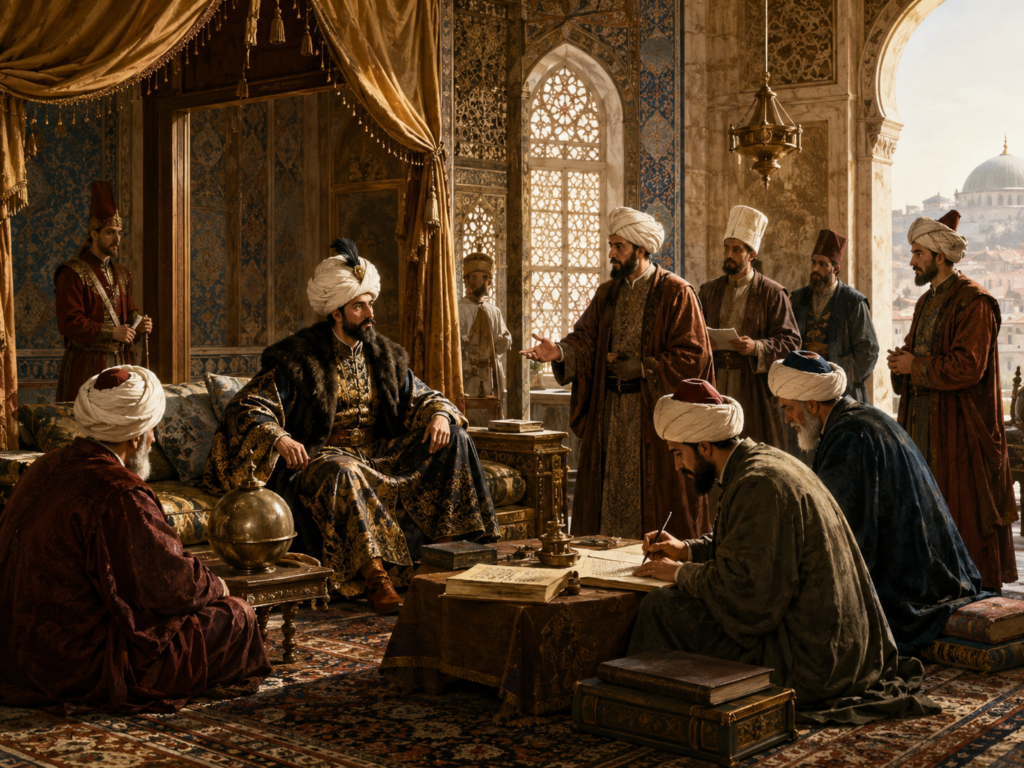
The Ottoman state is traditionally connected with Osman I, the leader from whom the name “Ottoman” comes. Osman ruled a small principality near the Byzantine frontier in northwestern Anatolia. His territory was not large at first, but its location was very important.
The frontier area gave the early Ottomans opportunities for expansion. The Byzantine Empire was weaker than it had been in earlier centuries, and many border regions were difficult for Constantinople to control. This allowed local Turkish leaders to grow stronger.
Osman I became known as a capable frontier leader. He attracted warriors, followers, and local supporters. His leadership helped turn a small political group into a growing power. The early Ottoman state was flexible, energetic, and connected with the idea of frontier struggle, settlement, and expansion.
Why Location Helped the Ottomans
Geography played a major role in Ottoman success. The early Ottoman lands were located near Byzantine territories and close to important routes between Anatolia and Europe. This gave the Ottomans access to both Asian and European opportunities.
Unlike some other Turkish beyliks that were surrounded by strong Muslim rivals, the Ottomans were positioned near a weakening Byzantine frontier. This allowed them to expand without immediately facing the strongest Turkish states of Anatolia.
Their location also helped them attract warriors who were looking for opportunity. Frontier regions often attracted ambitious fighters, settlers, religious figures, and local leaders. The Ottomans were able to bring many of these people into their system.
Osman I and the Foundation of Power
Osman I is remembered as the founder of the Ottoman dynasty. His exact life details are partly mixed with legend, but his historical importance is clear. He established a ruling family that continued for centuries and created the foundation of a state that would become a world empire.
Osman’s strength came from leadership and timing. He was able to use local conditions to his advantage. He built alliances, gained followers, and expanded gradually. His principality became known for its energy and ability to challenge Byzantine positions near the frontier.
The early Ottoman system was not yet a large empire. It was a developing frontier state. But it already had important qualities: strong leadership, military mobility, religious motivation, and openness to new supporters.
Orhan and the Growth of the Ottoman State
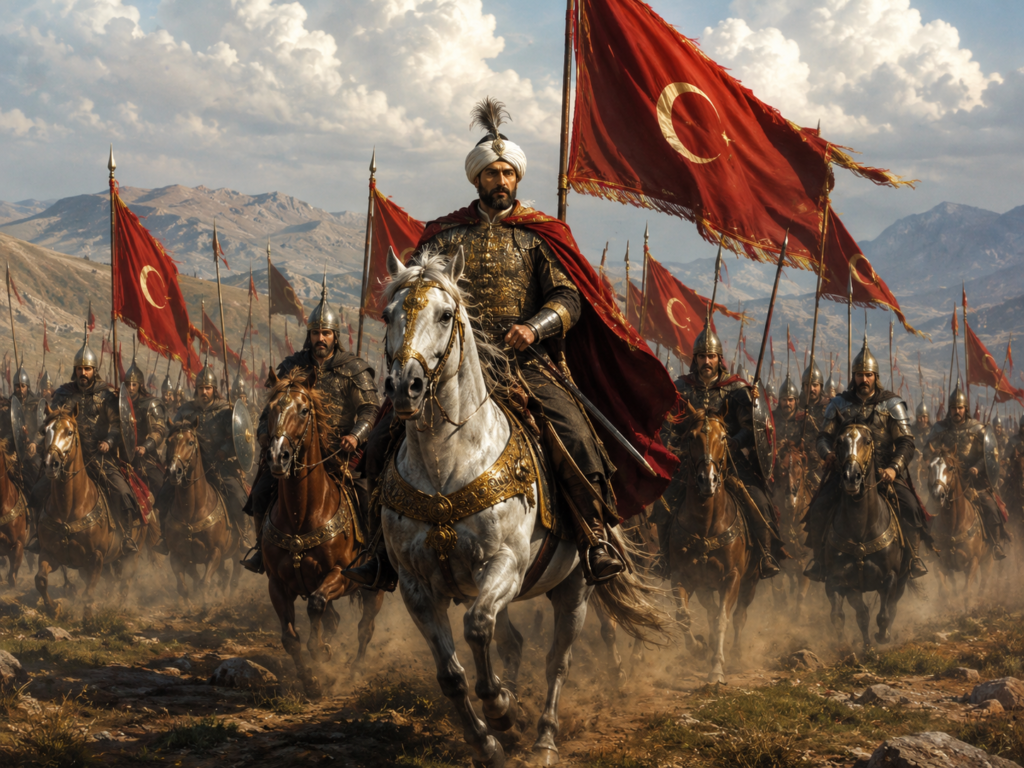
After Osman I, his son Orhan continued the expansion of the Ottoman state. Orhan’s period was very important because the Ottomans began to move from a small frontier principality toward a more organized state.
One of the most important events of Orhan’s time was the capture of Bursa. Bursa became an important Ottoman center and later served as a capital. This gave the Ottomans a major urban base, stronger economic resources, and greater political prestige.
Under Orhan, the Ottomans also began developing more formal institutions. A growing state needed administration, money, soldiers, judges, and organized leadership. Orhan’s rule helped create a stronger political structure.
The Importance of Bursa
Bursa was a major step in Ottoman history. It was not only a city; it was a symbol of growing Ottoman power. By gaining control of Bursa, the Ottomans gained access to trade, agriculture, craftsmen, and urban culture.
Bursa became a center of administration, architecture, commerce, and religious life. It helped the Ottomans move beyond the identity of a frontier warrior group and become a more settled political power.
The city also became associated with early Ottoman architecture and culture. Mosques, markets, and public buildings helped show that the Ottomans were becoming builders of society, not only military conquerors.
Ottoman Expansion into Europe
One of the most important turning points in Ottoman history was their movement into Europe. The Ottomans crossed into the Balkans and began expanding in southeastern Europe. This gave them new lands, new resources, and new strategic importance.
The entry into Europe allowed the Ottomans to take advantage of divisions among Balkan states. Many local rulers were divided by rivalry, political weakness, or conflict. The Ottomans used military strength and diplomacy to expand.
This European expansion was one reason the Ottoman state grew so quickly. The Balkans provided manpower, agricultural wealth, strategic roads, and important cities. The Ottomans gradually became a major force on both sides of the Bosporus.
Murad I and Stronger Organization
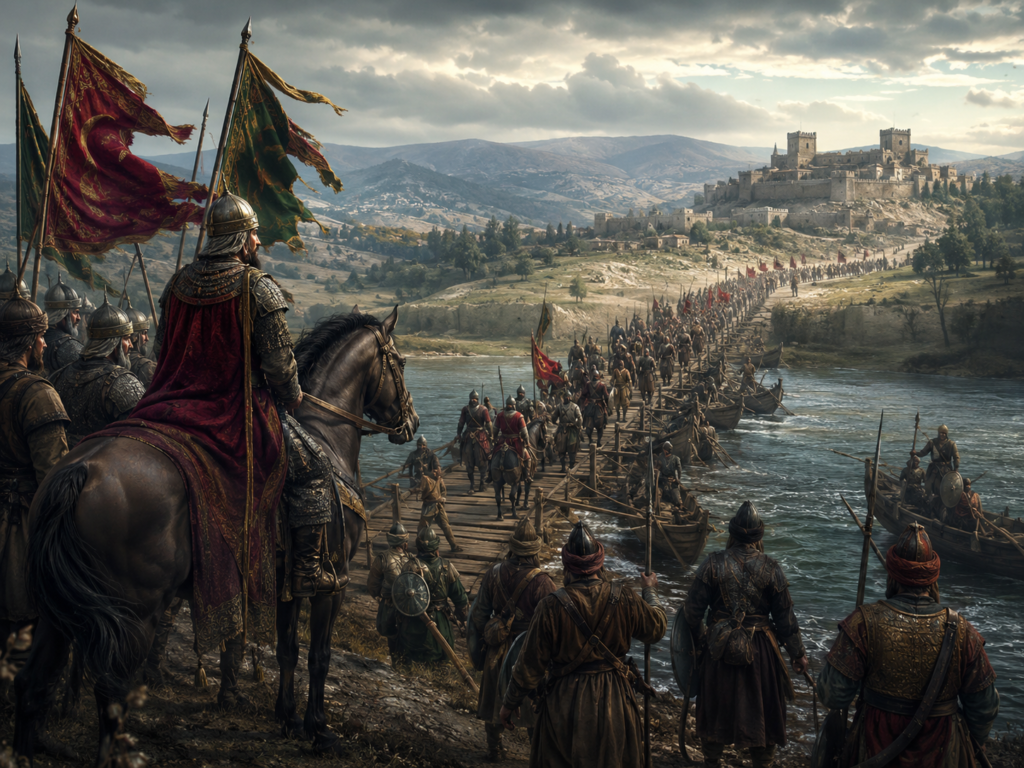
Murad I played a major role in transforming the Ottoman state into a stronger empire-like power. During his rule, Ottoman authority expanded deeper into the Balkans. He also helped strengthen the military and administrative structure of the state.
Murad’s rule showed that Ottoman expansion was not random. The Ottomans were building a system. They used military campaigns, alliances, local agreements, taxes, and administration to control new lands.
The Ottomans often allowed local communities to continue many of their traditions as long as they accepted Ottoman authority and paid taxes. This practical approach helped them govern different populations.
The Role of Military Strength
Military organization was a major reason for Ottoman success. The early Ottomans used cavalry forces, frontier warriors, and later more organized military units. Over time, they developed a disciplined army that could fight in different regions.
The Janissaries became one of the most famous military groups in Ottoman history. They were part of a more organized state military system that developed as the empire grew stronger. This helped the Ottomans move beyond tribal or temporary armies.
Ottoman military success came from discipline, mobility, leadership, and adaptation. They learned from enemies, used new methods, and improved their organization over time.
Leadership and Political Flexibility
Another important reason for Ottoman growth was political flexibility. The Ottomans were able to work with different groups when it helped the state. They made agreements with local rulers, used experienced administrators, accepted converts, and included people from different backgrounds in service.
This flexibility made the Ottoman system stronger. Instead of ruling only through force, the Ottomans often used a combination of military pressure, diplomacy, taxation, and local cooperation.
The empire became a multi-ethnic and multi-religious state. This required practical governance. The Ottomans learned how to manage diversity, and this skill helped them rule large territories for a long time.
Bayezid I and the Challenge of Timur
Bayezid I was an energetic and ambitious Ottoman ruler. Under him, the Ottomans continued expanding and became a major power. However, his reign also showed the dangers of rapid expansion.
In 1402, Bayezid faced Timur at the Battle of Ankara. The Ottoman defeat was a major crisis. Bayezid was captured, and the Ottoman state entered a period of internal conflict known as the Ottoman Interregnum.
This could have destroyed the Ottoman state completely. Many empires do not survive such a crisis. But the Ottomans eventually recovered, which shows the strength of their political foundation and ruling dynasty.
Recovery After Crisis
After the Battle of Ankara, the Ottoman state went through a difficult period of civil conflict among Bayezid’s sons. This period weakened the state, but it did not end it. Eventually, Mehmed I restored unity and helped rebuild Ottoman authority.
The recovery of the Ottomans is one of the most important parts of their rise. It shows that their state was not only built on conquest. It had enough loyalty, structure, and political identity to survive a major disaster.
After Mehmed I, Murad II continued strengthening the empire. By the time of Mehmed II, the Ottomans were ready for one of the most famous events in world history.
Mehmed II and the Conquest of Constantinople
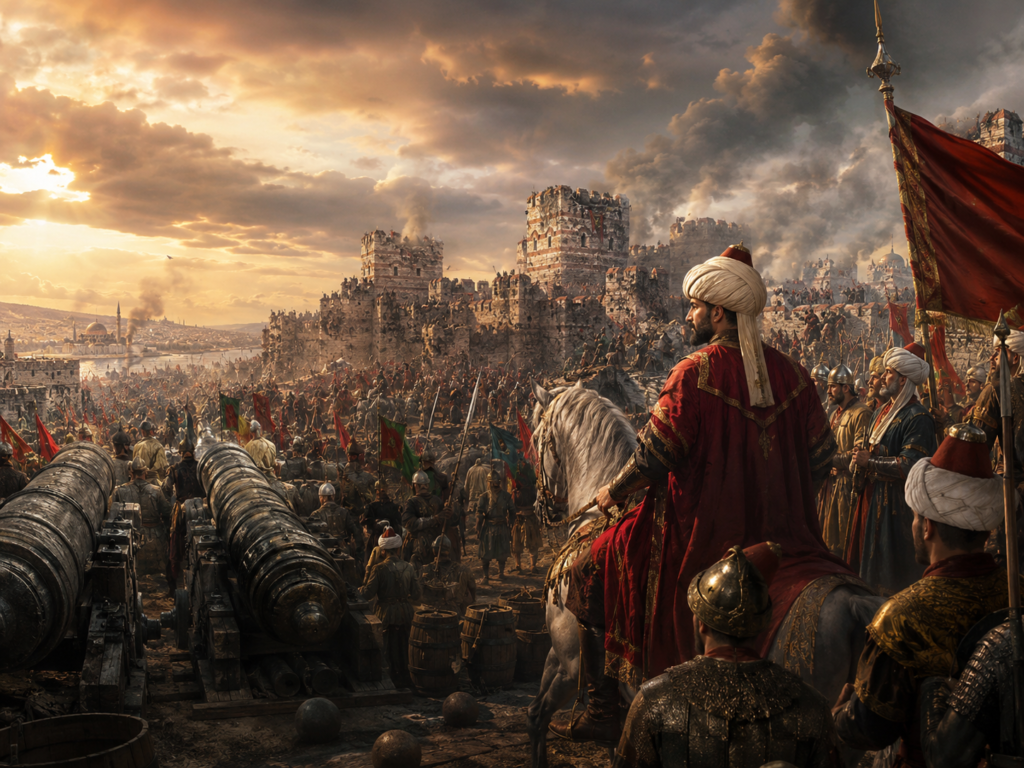
The conquest of Constantinople in 1453 by Sultan Mehmed II was a turning point in Ottoman and world history. Constantinople had been the capital of the Byzantine Empire for centuries. Its capture gave the Ottomans enormous prestige and made them one of the greatest powers of the time.
Mehmed II became known as “the Conqueror” because of this achievement. The city later became Istanbul and developed into the heart of the Ottoman Empire. It became a center of politics, trade, culture, religion, and administration.
The conquest of Constantinople also showed the power of Ottoman military organization, planning, and leadership. It marked the end of the Byzantine Empire and the rise of the Ottomans as a world empire.
Why the Ottomans Succeeded
The Ottoman Empire rose because of many factors working together. Strong leadership was one reason. The early rulers were ambitious and practical. They expanded carefully and built institutions as the state grew.
Geography was another factor. Their position on the Byzantine frontier gave them opportunities that other states did not have. They could expand into both Anatolia and Europe.
Military organization also mattered. The Ottomans developed disciplined forces and learned how to fight in different environments. They used cavalry, infantry, siege tactics, and later gunpowder weapons effectively.
Administration was equally important. The Ottomans created systems for taxation, land control, law, and military service. They learned how to manage different communities and territories.
Ottoman Culture and Identity
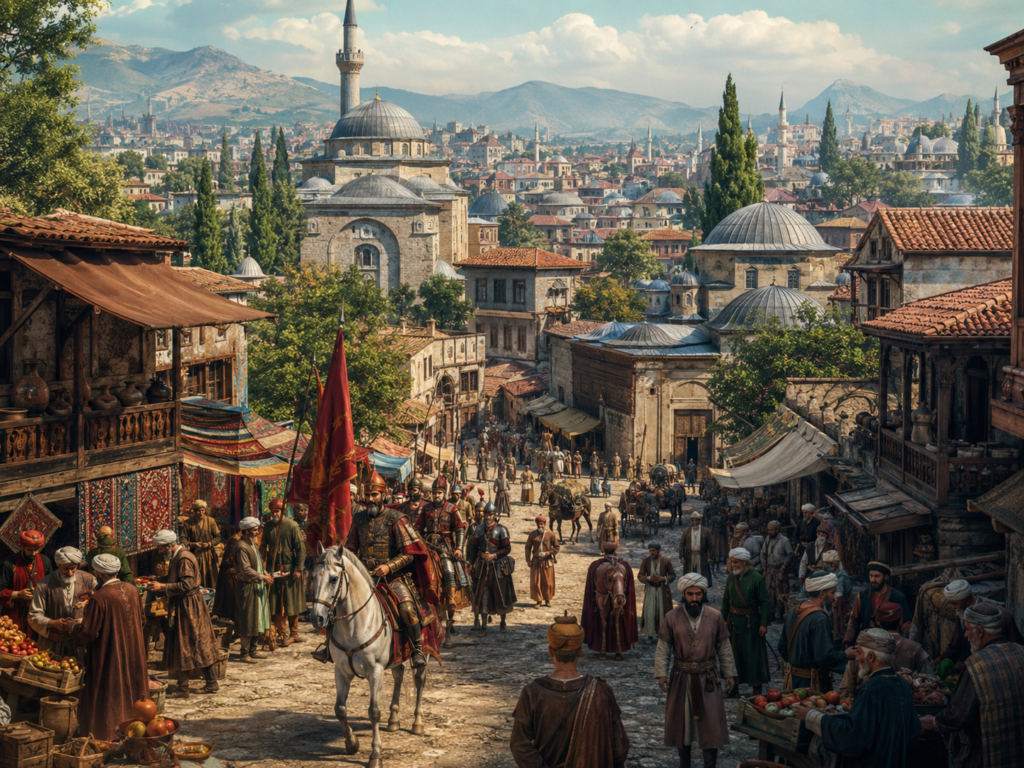
As the Ottomans expanded, they developed a rich culture influenced by Turkish, Islamic, Persian, Byzantine, Balkan, and Arab traditions. This cultural mixture became one of the strengths of the empire.
Ottoman architecture, literature, calligraphy, music, law, and education all developed over time. The empire was not only a military power; it was also a center of civilization.
Cities such as Bursa, Edirne, and Istanbul became important cultural centers. Mosques, schools, markets, bridges, and public buildings showed the empire’s growing wealth and identity.
The Ottoman Empire as a World Power
By the late 15th century, the Ottomans were no longer a small frontier state. They had become a major empire controlling important lands in Anatolia and the Balkans. Their capital, Istanbul, connected Europe and Asia.
In later centuries, the empire would expand further into the Middle East, North Africa, and central Europe. But the foundation of that greatness was built during the early centuries of Ottoman history.
The rise of the Ottoman Empire shows how a small state can become powerful through leadership, organization, opportunity, and long-term strategy.
Conclusion
The rise of the Ottoman Empire was not an accident. It was the result of geography, leadership, military strength, political flexibility, and strong organization. From the small frontier principality of Osman I, the Ottomans grew into a powerful state under Orhan, Murad I, Bayezid I, Mehmed I, Murad II, and Mehmed II.
Their story includes success, crisis, recovery, and transformation. They survived major challenges and continued to grow. The conquest of Constantinople in 1453 marked the beginning of a new era and confirmed the Ottomans as one of the great powers of history.
The Ottoman Empire became one of the most influential empires in the world because it combined military power with administration, culture, trade, and political skill. Its rise remains an important subject for anyone interested in Turkish history, Islamic civilization, and world history.