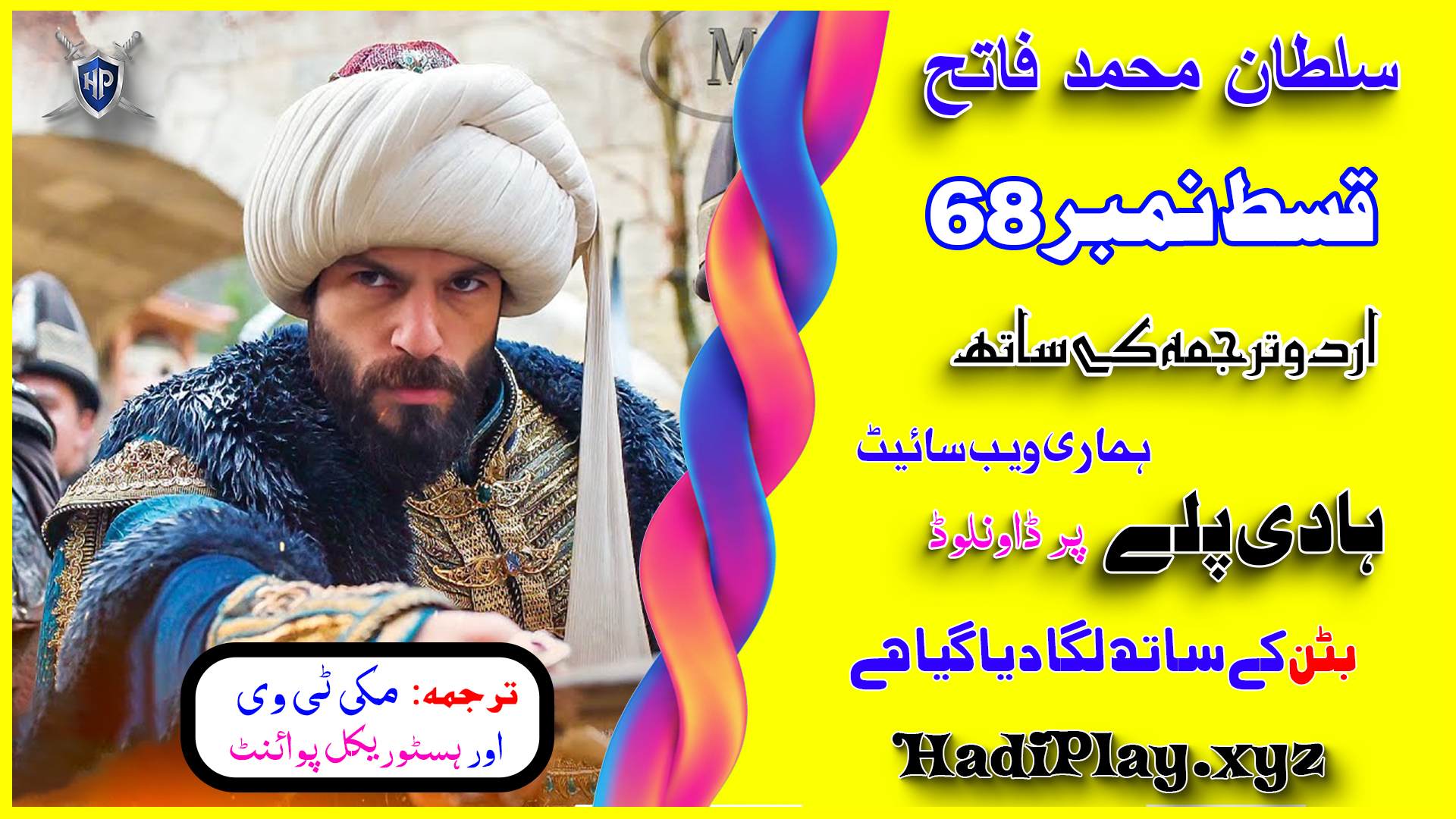
Sultan Muhammad Fatih Episode 68: The Sultan of Two Seas and Two Continents
Sultan Muhammad Fatih Episode 68 is a masterclass in historical diplomacy and statecraft. Following the spiritual and administrative foundation of the city in the previous episode, the narrative now shifts to the Sultan’s global vision. Mehmed II realizes that to protect the “New Rome,” he must secure the borders of the Balkans and the Anatolian heartland. With professional Urdu subtitles provided by Urdu Bolo, every sophisticated diplomatic maneuver and military decree is delivered with the linguistic depth and historical weight this epic saga demands.
The Dual Sovereignty: East and West
Episode 68 opens with the Sultan formalizing his title as Kayser-i Rûm (Caesar of Rome). The narrative brilliantly portrays his dual identity—on one hand, the Commander of the Faithful leading the Islamic world, and on the other, the inheritor of the Roman imperial legacy. The atmosphere is one of intellectual grandeur as the Sultan consults with both Muslim scholars and Greek philosophers to create a unique Ottoman synthesis.
The episode goes into great detail about the “Maritime Doctrine.” Fatih realizes that Istanbul’s survival depends on controlling the “Two Seas” (The Black Sea and the Mediterranean). We see the first orders being issued for the expansion of the Imperial Naval Arsenal, marking the beginning of Ottoman naval supremacy.
Mehmed II: The Intellectual Conqueror
In this chapter, we see the Sultan’s passion for the arts and sciences. Episode 68 showcases his personal library and his fascination with cartography. There is a pivotal scene where he studies a world map, realizing that the discovery of new routes and lands will redefine the power balance of the future.
His interactions with his son, Prince Bayezid, and his advisors highlight the theme of “Legacy.” He is seen preparing the next generation not just for war, but for the heavy burden of ruling a pluralistic empire. His character evolution in this episode establishes him as a ruler who thinks in centuries, not just in years.
The Balkan Front: The Shadow of Vlad the Impaler
While Istanbul is being rebuilt, a dark threat emerges from the North. Episode 68 introduces the escalating tensions with Vlad Tepes (Dracula) in Wallachia. The narrative explores the complex “Vassal-State” relationships of the era. This subplot adds a layer of “Historical Horror” and high-stakes tension to the show.
The dialogue between the Ottoman envoys and the Balkan lords highlights the clash of cultures and the difficulty of maintaining peace on a volatile frontier. The Sultan’s resolve to bring order to the Balkans becomes a primary driving force for the upcoming military campaigns.
🔹 Story Focus
A Sultan does not just rule the land he walks upon; he rules the future he envisions for his people.
The Social Fabric: The Rebirth of Trade
A major highlight of Episode 68 is the focus on the “Grand Bazaar” and the economic revival of the city. We see the Sultan implementing tax reforms to encourage international merchants to return to the capital. This focus on “Wealth through Justice” shows that the Ottoman victory was a gift to the global economy.
The cinematography uses the vibrant colors and sounds of the emerging markets to create a visual metaphor for the city’s heartbeat returning. The sound design—blending the calls of the merchants with the rhythmic work of the stonemasons—creates an immersive atmosphere of a civilization in progress.
🔹 Thematic Note
The sword captures the fortress, but it is the merchant and the scholar who make the fortress an empire.
Urdu Subtitles by Urdu Bolo: Precision in Diplomacy
The Urdu subtitles by Urdu Bolo for Episode 68 are essential for capturing the nuances of the diplomatic exchanges and the sophisticated legal terminology of the “Kanun-name” (Book of Laws). Given the heavy use of 15th-century courtly language, the translation is handled with professional care. This ensures that the Urdu-speaking audience stays fully immersed in the intellectual and strategic depth of the Sultan’s court.
Why Episode 68 is a Strategic Landmark
This episode matters because it officially begins the “Imperial Phase” of the series. It proves that Sultan Muhammad Fatih was a genius of multi-dimensional warfare—using culture, law, and economics as effectively as he used cannons. It is a landmark chapter that leaves the viewer inspired by the Sultan’s vision of a global superpower built on the foundations of knowledge and justice.
🔹 Story Progression Note
Episode 68 is the transition from “The Conquest” to “The Caliphate”—the moment where the Sultan begins to redraw the map of the world.
Frequently Asked Questions (FAQs)
🔹 Q1: Does the episode feature a major battle? While the focus is on diplomacy and strategy, the episode concludes with a high-stakes border skirmish in the Balkans, signaling the start of a new campaign.
🔹 Q2: How does the Sultan handle the internal dissent among his generals? Mehmed II uses a combination of iron-willed authority and visionary logic to align his commanders with his new global strategy.
🔹 Q3: Is there a focus on the Sultan’s education in this episode? Yes, the episode features scenes of the Sultan engaging in scientific experiments and linguistic studies, highlighting his “Renaissance Prince” persona.
🔹 Q4: How does Urdu Bolo handle the translation of the historical titles? Urdu Bolo provides accurate and historically grounded Urdu equivalents for titles like Kayser-i Rûm, Sadr-ı Azam, and Nişancı, making the hierarchy easy to follow.