Sultan Muhammad Fateh (Mehmed II): The Visionary Who Changed History
The story of Sultan Muhammad Fateh, known to the world as Mehmed the Conqueror, is not merely the story of a king; it is the chronicle of a man who bridged the Middle Ages and the Renaissance. His life defines the transition of power from the ancient Byzantine traditions to the rising sun of the Ottoman Empire. For those who watch the drama series on HadiPlay.xyz, understanding the real historical context behind the Sultan’s actions provides a much richer viewing experience.
The Early Years: Preparation for Destiny
Born in 1432 in Edirne, Mehmed II was raised with the weight of destiny on his shoulders. From a young age, he was tutored by the greatest scholars of his time, learning languages, mathematics, history, and military strategy. His father, Sultan Murad II, ensured that his son was not just a warrior, but a philosopher-king. This dual education became the foundation of Mehmed’s future successes.
He ascended to the throne for the first time at the tender age of 12, an experience that taught him the fragility of power and the importance of absolute authority. By the time he permanently ascended to the throne in 1451, he was no longer a child—he was a seasoned statesman ready to change the map of the world.
The Vision of Constantinople

Since the dawn of the Ottoman state, Constantinople (modern-day Istanbul) had been the ultimate prize. It sat at the crossroads of Europe and Asia, controlling the trade routes and acting as the final vestige of the Roman Empire. Many had tried to conquer it, but all had failed.
Mehmed did not view the city as just a military target. He viewed it as the center of the world. He understood that as long as Constantinople remained in Byzantine hands, it was a dagger pointed at the heart of his empire. His preparation was meticulous. He didn’t just gather an army; he gathered the best engineers, cartographers, and scholars in the known world.
Engineering the Impossible: Rumeli Hisar
One of Mehmed’s first major masterstrokes was the construction of the Rumeli Hisar fortress. Built in just four months across from the existing Anadoluhisarı fortress, this project was designed to choke off the Bosphorus strait.
This wasn’t just a military structure; it was a psychological weapon. It proved to the Byzantine Emperor, Constantine XI, that Mehmed was not just another Sultan—he was a visionary who controlled the very flow of the seas.
The Great Cannon (Basilica)
Siege warfare in the 15th century was largely about walls. To break the Theodosian Walls of Constantinople, which had stood for a thousand years, Mehmed needed power. He hired a Hungarian engineer named Urban to cast the “Great Cannon” (Basilica). This cannon was a monster of iron and bronze, capable of firing boulders weighing over 600 pounds. It changed the history of warfare forever, signaling the end of the era of high-walled stone fortifications.
The Masterstroke: Overland Transport of Ships
During the 1453 siege, the Golden Horn harbor was protected by a massive, impenetrable iron chain. The Byzantine navy controlled the sea, and the Ottoman fleet could not enter.
Mehmed, in a move that historians still marvel at, ordered his ships to be transported overland across the hills of Galata, using greased logs. In a single night, the Ottoman navy appeared inside the Golden Horn, behind the Byzantine defenses. This move broke the morale of the defenders and forced them to divert precious troops to defend the sea walls.
May 29, 1453: The Day of Conquest
After 53 days of intense siege, the final assault began in the early hours of May 29. The Ottoman infantry, led by the Janissaries, surged forward with unparalleled ferocity. By the afternoon, the flags of the Sultan flew over the city.
Mehmed entered the city not as a destroyer, but as a restorer. He stopped the looting immediately, ordered the protection of the Hagia Sophia, and declared it a place of worship. This act of grace showed the world that the “Conqueror” was also a ruler of deep culture and respect for history.
A Multicultural Empire
Once he became the “Fatih” (Conqueror), Mehmed didn’t just rule Turks; he ruled Greeks, Armenians, Jews, and Latins. He established the Millet system, allowing each religious community to govern their own internal affairs under their own laws.
He was a patron of the arts, inviting Renaissance painters like Gentile Bellini to his court. He encouraged scholars to come to Istanbul from all over the world. Under his reign, Istanbul became a true “New Rome”—a city where scholars, merchants, and scientists could flourish regardless of their background.
The Scientific Mind
Mehmed was deeply interested in geography and astronomy. He commissioned maps that were far more accurate than anything produced in Europe at the time. He understood the power of information. He was the first Sultan to create a permanent imperial archive, realizing that history, if recorded, becomes the greatest weapon for a leader.
The Final Legacy
Sultan Mehmed II died in 1481 while preparing for another massive campaign. He left behind an empire that spanned three continents and a legacy that defined the course of modern history. He shifted the center of gravity of the world toward the East, and in doing so, he made Istanbul the capital of civilization.
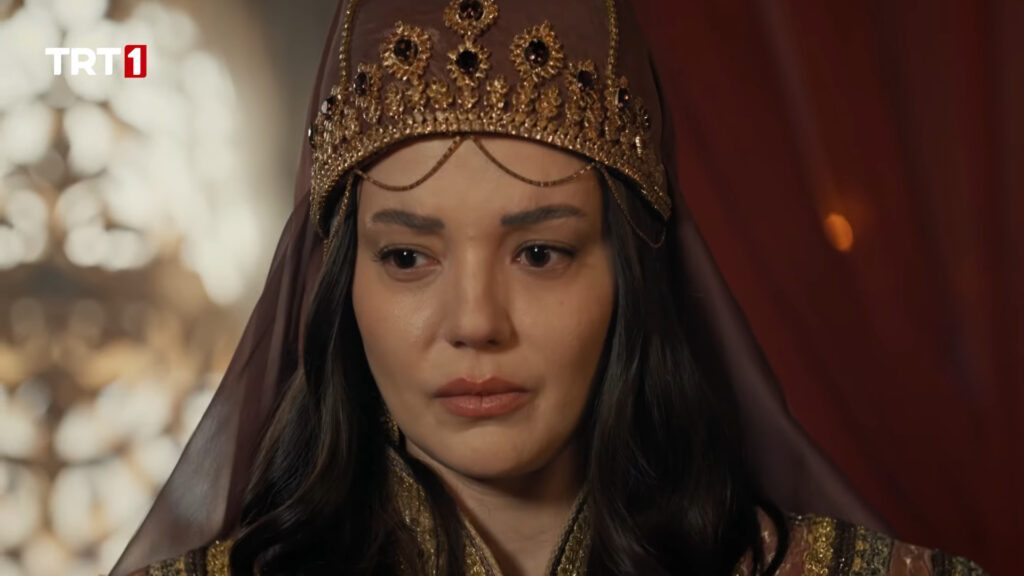
For the modern viewer of the Mehmed: Fetihler Sultanı series, it is important to realize that the Sultan you see on screen is a reflection of this multifaceted historical figure. He was a man of iron will, but also a man of deep intellectual curiosity. He was a warrior who understood that the ultimate conquest isn’t land, but the minds and hearts of the people he ruled.
Conclusion: Why His Story Matters Today
Sultan Muhammad Fateh’s life serves as a timeless lesson in leadership. Whether it is his ability to innovate, his talent for surrounding himself with the best minds, or his commitment to building a diverse society, his reign offers a blueprint for greatness.
When you watch the latest episodes on HadiPlay.xyz, remember that the struggles you see—the internal politics, the external threats, and the personal sacrifices—were real. They are the building blocks of an empire that shaped the modern world. Stay tuned to HadiPlay for more historical depth and the latest episodes of this grand saga.
Frequently Asked Questions (Q&A)
Q1: Was Sultan Mehmed II really as intelligent as the series portrays?
- A: Yes, history records him as a polyglot (speaking Turkish, Greek, Persian, Arabic, and more) and a keen student of science and military technology. His strategic decisions during the siege of Constantinople are still studied in military academies today.
Q2: What happened to Hagia Sophia after the conquest?
- A: Sultan Mehmed converted Hagia Sophia into a mosque, but he also preserved much of its Byzantine heritage, creating a unique synthesis of Islamic and Christian art that remains a masterpiece of global architecture.
Q3: Is the conquest of Constantinople the end of the series?
- A: The series explores the life of Mehmed as a whole. While the conquest is the climax, his later years as an empire-builder are just as fascinating and crucial to understanding the Ottoman history we see today.