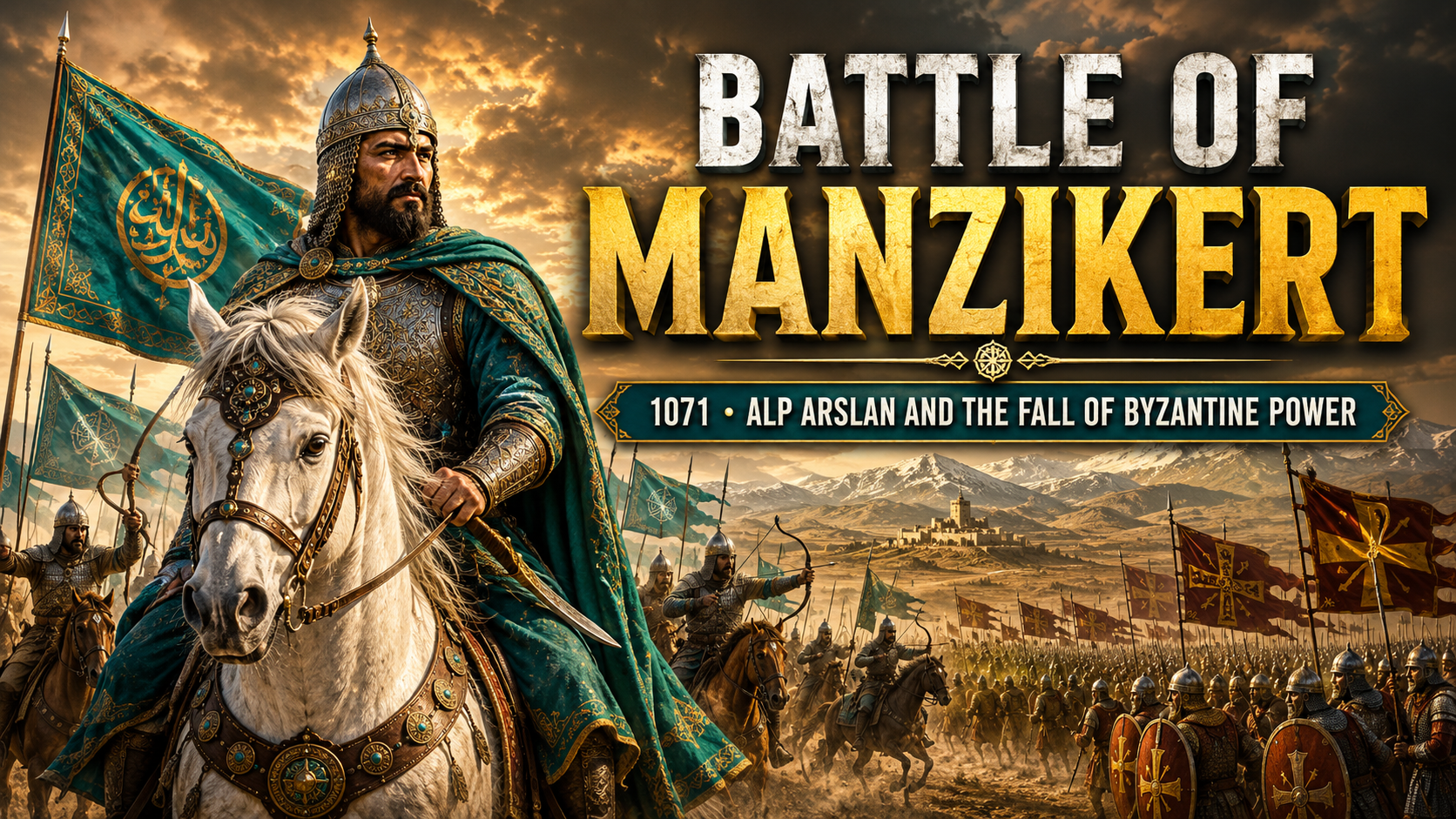
The Battle of Manzikert and Its Impact on Anatolian History
The Battle of Manzikert is one of the most important events in medieval history. It took place in 1071 between the Great Seljuk Empire and the Byzantine Empire near Manzikert, a town in eastern Anatolia. The battle is remembered because it changed the political future of Anatolia and opened the way for greater Turkish settlement in the region. It was not only a military clash between two armies; it became a turning point that influenced the history of the Middle East, the Byzantine world, and the future of Turkish civilization.
The Seljuk army was led by Sultan Alp Arslan, one of the most famous rulers of the Great Seljuk Empire. The Byzantine army was led by Emperor Romanos IV Diogenes, who wanted to stop Seljuk influence and restore Byzantine strength in eastern Anatolia. The result of the battle was a major Seljuk victory. This victory weakened Byzantine power in Anatolia and created conditions that later allowed Turkish states to grow in the region.
Historical Background Before the Battle
To understand the importance of Manzikert, it is necessary to look at the situation before 1071. Anatolia was one of the most valuable regions of the Byzantine Empire. It provided soldiers, food, taxes, and strategic security. For centuries, the Byzantine Empire had controlled much of Anatolia and used it as a strong base against threats from the east.
However, by the 11th century, the Byzantine Empire was facing serious internal and external problems. Political struggles, military pressure, economic issues, and weak leadership made it harder for the empire to defend its borders. At the same time, the Seljuks were rising as a powerful force in the Muslim world. They had expanded from Central Asia into Iran, Iraq, Syria, and nearby regions.
The Seljuks were not simply raiders. They were building a major empire and becoming protectors of Sunni Islamic authority. Their rulers were ambitious, organized, and militarily skilled. As Turkish groups moved westward, they began entering parts of Anatolia. This created tension with the Byzantine Empire.
The Rise of the Great Seljuk Empire
The Great Seljuk Empire became one of the most powerful states of the 11th century. It was founded by Turkic leaders connected with the Oghuz tribes. Over time, the Seljuks accepted Islam and became important in the wider Muslim world. Their military success, political organization, and support for scholars helped them gain legitimacy.
Under leaders such as Tughril Beg, Alp Arslan, and Malik Shah, the Seljuks expanded across large areas. They controlled important trade routes and major cities. They also supported education, administration, and religious institutions.
The Seljuks became especially important after they entered Baghdad in 1055 and gained recognition as protectors of the Abbasid Caliphate. This gave them both political and religious prestige. By the time of Alp Arslan, the Seljuk Empire was already a major power.
Who Was Sultan Alp Arslan?
Sultan Alp Arslan was the second sultan of the Great Seljuk Empire. His name means “heroic lion” or “brave lion” in Turkish tradition. He is remembered as a strong military leader, a skilled ruler, and one of the most important figures in Seljuk history.
Alp Arslan was not only a warrior. He also understood the importance of administration, loyalty, and political strategy. He worked with capable officials such as Nizam al-Mulk, one of the greatest statesmen of the medieval Islamic world. Together, they strengthened the empire and helped organize its government.
Before Manzikert, Alp Arslan had already shown his military ability in different campaigns. He was focused on protecting Seljuk interests and expanding influence where necessary. When he faced the Byzantine emperor in 1071, he was dealing with one of the most powerful political forces of the time.
Who Was Emperor Romanos IV?
Romanos IV Diogenes was the Byzantine emperor who led the campaign against the Seljuks. He became emperor during a difficult period for Byzantium. The empire needed strong military leadership because its eastern borders were under pressure.
Romanos wanted to restore Byzantine authority in Anatolia. He believed that a major campaign could push back the Seljuks and strengthen his position at home. His army included different groups, such as Byzantine soldiers, mercenaries, and allied forces.
However, the Byzantine army had internal problems. Not all commanders were fully loyal to Romanos. Political rivalries in Constantinople affected the unity of the army. This lack of trust became an important weakness during the campaign.
Why the Battle Happened
The Battle of Manzikert happened because both empires were trying to protect their interests in Anatolia. The Byzantines wanted to stop Seljuk movement and restore control over eastern regions. The Seljuks wanted to secure their position and defend themselves against Byzantine military pressure.
Anatolia was important because it connected many regions. It was close to the Caucasus, Syria, Mesopotamia, and the Mediterranean world. Control over Anatolia meant control over roads, resources, military routes, and cities.
Romanos IV launched a large campaign in 1071 to confront the Seljuks. He hoped to achieve a major victory that would strengthen Byzantine power. Alp Arslan, who was initially focused on other campaigns, quickly responded when he realized the seriousness of the Byzantine movement.
The Byzantine Army
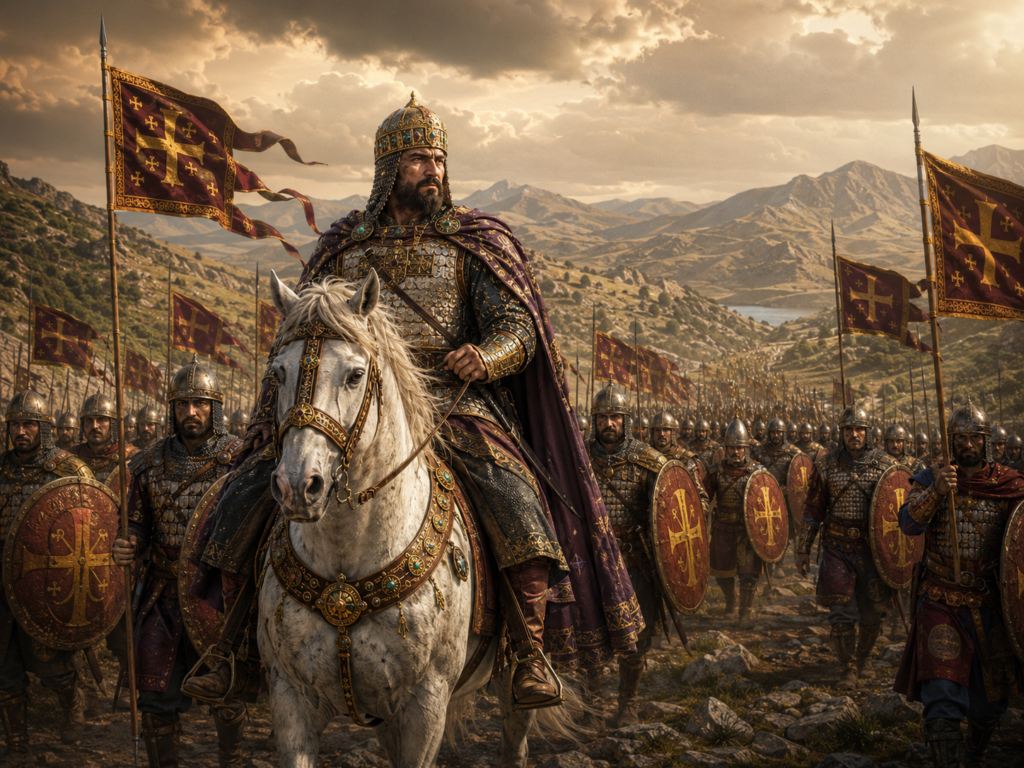
The Byzantine army at Manzikert was large and diverse. It included professional soldiers, regional forces, foreign mercenaries, and allied troops. On paper, it looked powerful. However, size alone does not guarantee success in battle.
The army had problems with coordination and loyalty. Some groups had different interests. Some commanders did not fully support the emperor. Mercenary soldiers could be unreliable if conditions became difficult.
Another problem was that the Byzantine army was operating far from its strongest centers of power. Long campaigns required supplies, discipline, and unity. Any weakness in leadership or communication could become dangerous.
The Seljuk Army
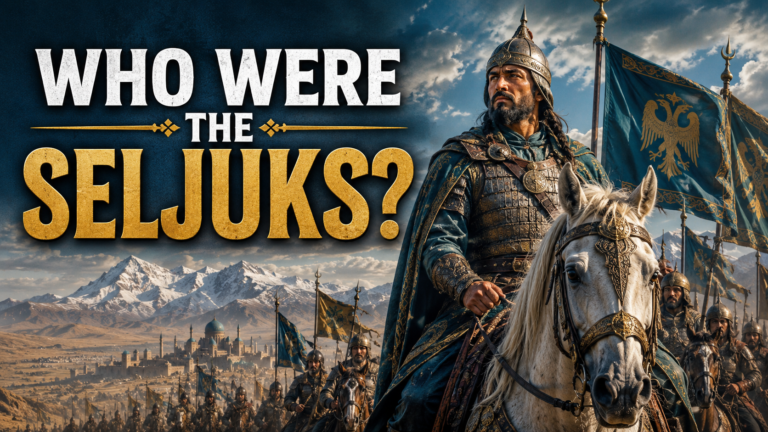
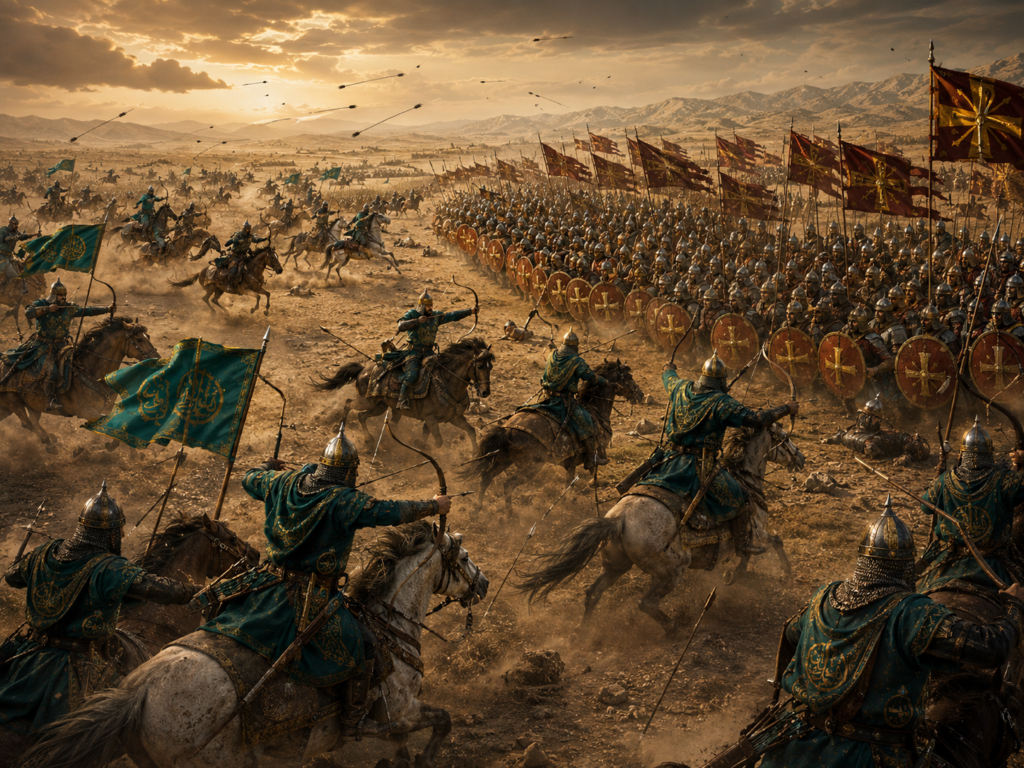
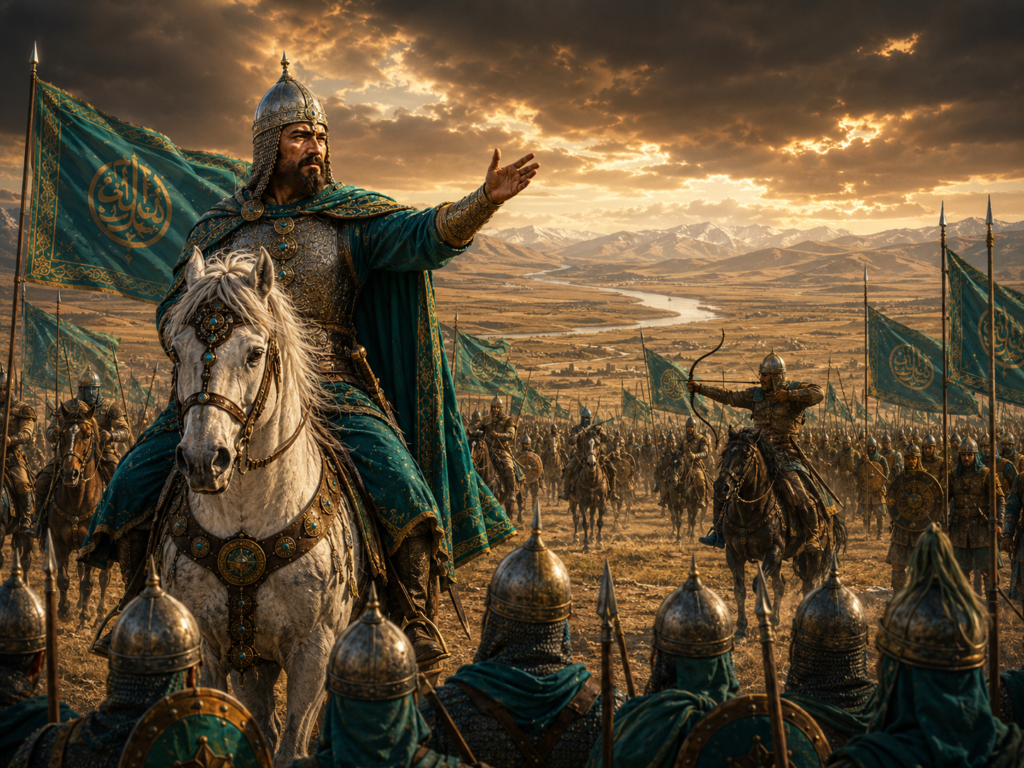
The Seljuk army was different from the Byzantine army. It relied heavily on mobile cavalry, especially skilled mounted archers. Seljuk soldiers were experienced in fast movement, flexible tactics, and battlefield deception.
Instead of depending only on heavy formations, the Seljuks used mobility to tire and confuse their enemies. They could attack quickly, retreat, surround, and strike again. These tactics were especially effective against larger or slower armies.
Alp Arslan understood the strengths of his forces. He did not need to fight exactly the way the Byzantines expected. He used the open terrain and mobility of his cavalry to create pressure and confusion.
The Day of the Battle
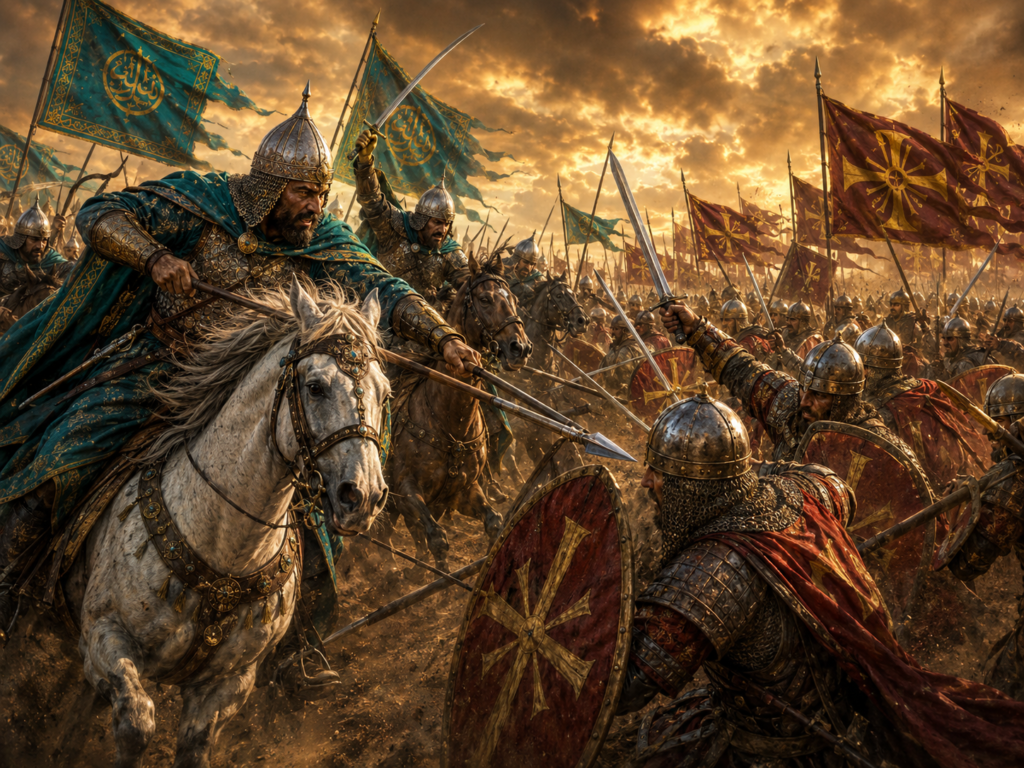
The battle took place on 26 August 1071. The two armies met near Manzikert. Romanos IV wanted a decisive battle, hoping to defeat the Seljuks and secure Byzantine control. Alp Arslan prepared his forces carefully and used tactical patience.
The Seljuks used hit-and-run attacks, mounted archery, and controlled retreats. These tactics stretched the Byzantine army and made it harder for Romanos to maintain order. As the day continued, confusion increased.
One of the most serious problems for the Byzantines was the role of internal betrayal or lack of support. Some Byzantine forces did not act as expected. When parts of the army withdrew or failed to support the emperor, the Byzantine battle line weakened.
Eventually, the Seljuks surrounded and defeated the Byzantine army. Emperor Romanos IV was captured, an event that shocked the Byzantine world.
The Capture of Romanos IV
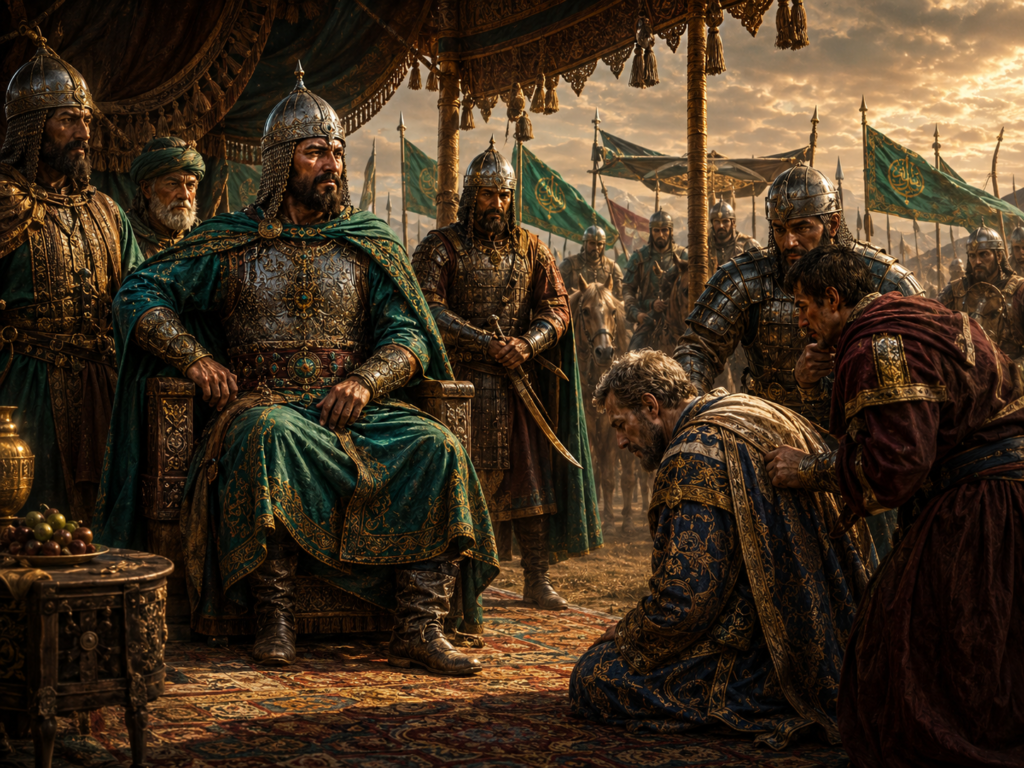
The capture of a Byzantine emperor was a rare and dramatic event. Sultan Alp Arslan treated Romanos with a degree of respect after the battle. Instead of executing him, he made an agreement and allowed him to go free after accepting terms.
This moment is important because it shows that medieval politics was not only about destruction. Rulers often used diplomacy after battle to secure advantage. Alp Arslan had achieved a major victory and did not need to destroy everything immediately.
However, when Romanos returned, his political position was badly damaged. His enemies in Constantinople moved against him. The defeat at Manzikert weakened his authority and increased internal conflict within the Byzantine Empire.
Immediate Results of the Battle
The immediate result of Manzikert was a major Seljuk victory and a serious Byzantine defeat. But the full impact was not seen in one day. The battle created political instability in Byzantium and weakened the empire’s ability to defend Anatolia.
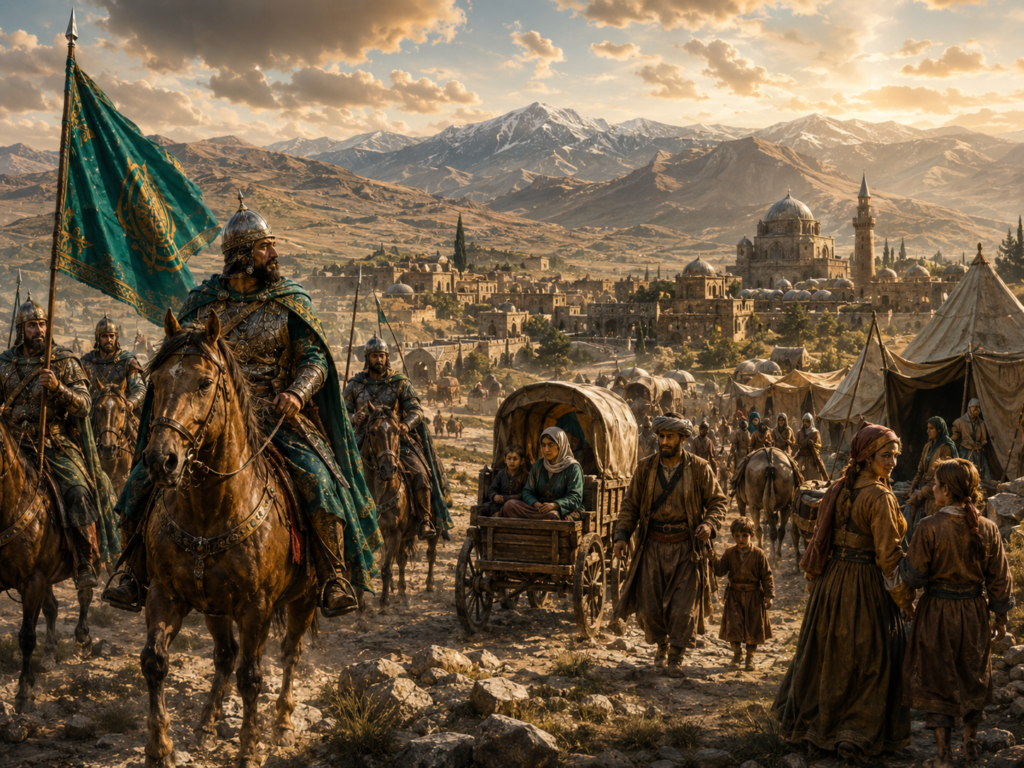
After the battle, the Byzantine Empire struggled with civil conflict and leadership problems. This made it difficult to organize a strong defense. Turkish groups began moving into Anatolia in greater numbers. Different local powers and frontier groups took advantage of the situation.
The battle did not mean that all of Anatolia instantly became Turkish. Historical change happened gradually. But Manzikert opened the door for a long process that transformed the region.
Long-Term Impact on Anatolia
The long-term impact of Manzikert was enormous. Over the following decades, Turkish settlement increased in Anatolia. New Turkish political groups appeared, and the region slowly changed in language, culture, religion, and political identity.
The Seljuks of Rum later became an important Turkish state in Anatolia. Their capital, Konya, became a major center of culture, learning, architecture, and trade. This Anatolian Seljuk state played a key role in the history of the region.
Manzikert is often seen as the beginning of a new era in Anatolia. It helped prepare the ground for later Turkish states, including the Ottomans. Without the changes after Manzikert, the later history of Anatolia would have been very different.
Impact on the Byzantine Empire
For the Byzantine Empire, Manzikert was a major blow. The defeat weakened the empire’s control over Anatolia, which had been one of its most important regions. Anatolia provided manpower, taxes, food, and strategic depth. Losing influence there made the empire much weaker.
The political crisis after the battle was also damaging. Instead of uniting after the defeat, Byzantine elites became involved in internal struggles. This made recovery harder.
The empire continued to exist for centuries after Manzikert, but its strength was reduced. The loss of Anatolian resources affected its military and political future. Manzikert was not the only cause of Byzantine decline, but it was one of the most important turning points.
Impact on Turkish History
For Turkish history, Manzikert holds deep significance. It is remembered as the battle that opened Anatolia to Turkish settlement and political development. It became a symbol of Turkish presence in the region.
The battle helped create conditions for the rise of Turkish principalities and states in Anatolia. These states developed local cultures, built cities, supported trade, and created new political structures.
Over time, Anatolia became a center of Turkish civilization. The Seljuks of Rum, various beyliks, and later the Ottoman Empire all developed within this wider historical process. Manzikert stands at the beginning of that long story.
The Role of Geography
Geography played an important role in the battle and its consequences. Eastern Anatolia was a frontier region where empires met. It was difficult to control because of mountains, distance, and diverse local populations.
The open spaces of the region favored mobile cavalry tactics. Seljuk mounted archers could move quickly and use the land to their advantage. The Byzantine army, though large, struggled with coordination in such conditions.
After the battle, Anatolia’s geography also helped new groups settle and expand. The region contained plains, valleys, cities, trade routes, and defensive positions. This made it attractive to Turkish groups looking for new lands and opportunities.
Military Lessons from Manzikert
The Battle of Manzikert offers several military lessons. First, discipline and unity are more important than numbers alone. The Byzantine army was large, but internal problems weakened it.
Second, mobility can defeat a larger force. Seljuk cavalry tactics allowed them to control the rhythm of battle. They attacked, withdrew, and surrounded their enemy at the right time.
Third, leadership matters. Alp Arslan used patience and strategy, while Romanos faced problems within his own command. A divided army can fail even when it appears strong.
Manzikert and the Islamic World
The victory at Manzikert also increased the prestige of the Seljuks in the Islamic world. It showed that they could defeat one of the most powerful Christian empires of the time. This strengthened their image as defenders and leaders of the Muslim world.
The battle also helped connect Turkish political power more deeply with Islamic civilization. As Turkish states developed in Anatolia, they supported mosques, madrasas, caravanserais, scholars, artists, and merchants.
This cultural development became one of the most important results of the wider Seljuk movement into Anatolia.
The Seljuks of Rum
After Manzikert, the Seljuks of Rum became one of the most important powers in Anatolia. The word “Rum” referred to the Roman or Byzantine lands of Anatolia. This state developed its own political and cultural identity.
The Seljuks of Rum built beautiful architecture, supported trade, and made cities like Konya important centers of civilization. They also built caravanserais along trade routes, helping merchants and travelers move safely.
Their rule showed that Turkish settlement in Anatolia was not only military. It became cultural, economic, and social. This was one of the most lasting effects of Manzikert.
Why Manzikert Still Matters Today
Manzikert still matters because it represents a turning point in the history of Anatolia. It changed the balance of power between the Byzantines and the Seljuks and opened the way for long-term transformation.
For students of history, the battle helps explain how regions change over time. A single battle does not change everything instantly, but it can create conditions that shape centuries.
Manzikert is important not only for Turkish history but also for Byzantine, Islamic, Middle Eastern, and world history. It connects military history with migration, culture, politics, and identity.
Conclusion
The Battle of Manzikert was one of the most important battles of the medieval world. In 1071, Sultan Alp Arslan and the Seljuk army defeated Emperor Romanos IV and the Byzantine forces. This victory weakened Byzantine control in Anatolia and opened the way for greater Turkish settlement in the region.
The battle did not change Anatolia overnight, but it began a long process of transformation. Turkish states grew, new cultural centers developed, and Anatolia gradually became a major center of Turkish and Islamic civilization.
Manzikert’s importance lies not only in the battlefield victory but also in its long-term consequences. It shaped the future of Anatolia, influenced the decline of Byzantine power, strengthened Seljuk prestige, and prepared the ground for later Turkish states. That is why the Battle of Manzikert remains one of the most significant events in history.