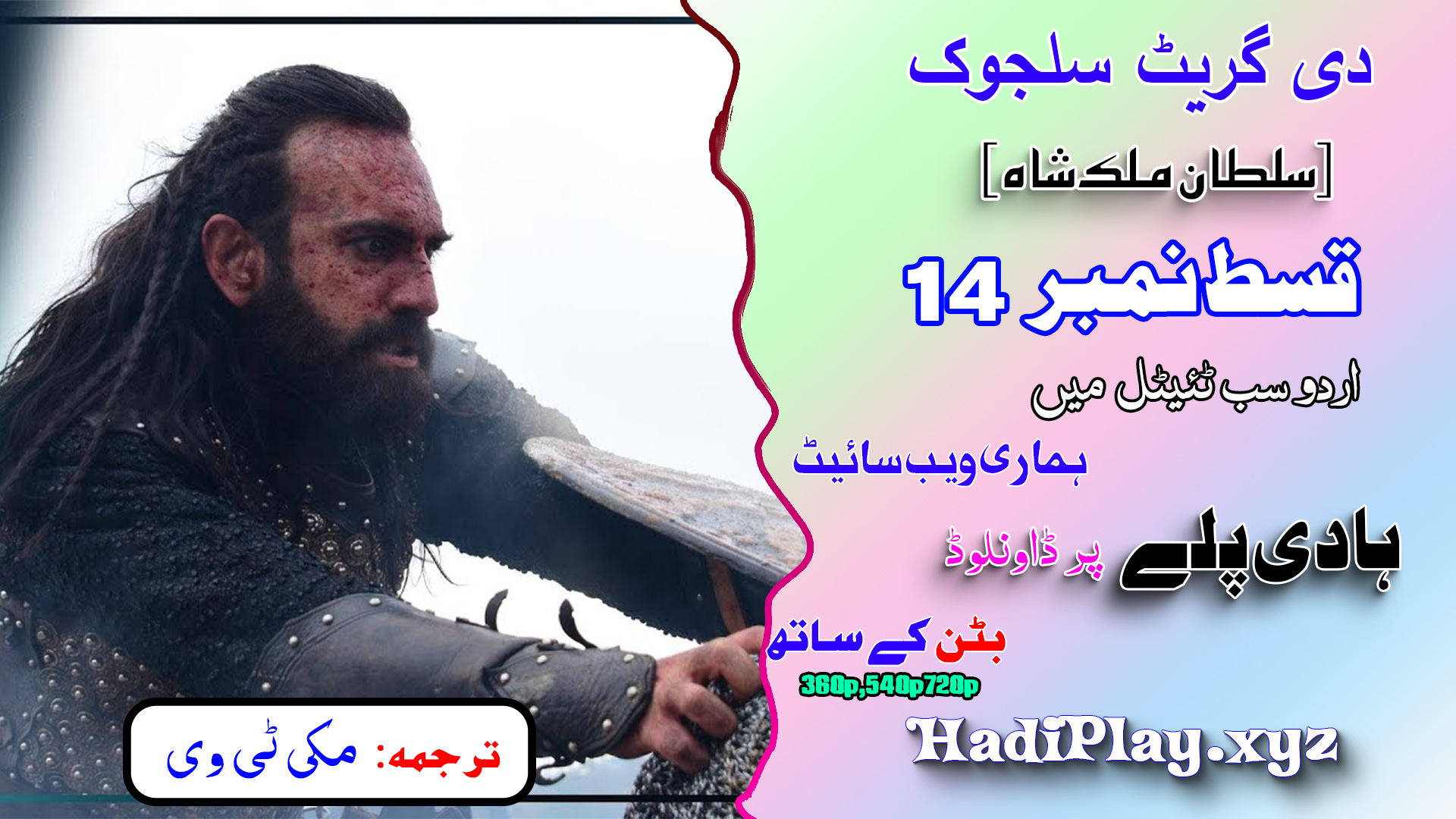
🌍 The Shadow of the West: The Great Seljuk Episode 14—The Crusader Threat and Sencer’s New Mandate 👑
The Great Seljuk (Uyanış: Büyük Selçuklu) Episode 14 marks the significant shift in the series’ focus from internal threats to major external geopolitical challenges. Following the definitive victory at Alamut Castle and the purging of the internal conspirators (Episode 13), Sultan Melikşah must now confront the looming danger that has been gathering on his western borders: the growing political and military momentum for the First Crusade from Western Europe. This episode is defined by the strategic realignment of the Seljuk state, Sencer’s new mission on the Anatolian frontiers, and Hasan Sabbah’s terrifying pivot to international alliances.
The transition from the contained siege to a wide-scale international crisis requires complex diplomatic and military planning. The Urdu Subtitles (provided by dedicated groups like Hadi Play) are essential for translating the high-level diplomatic reports, the military assessments of the Crusader armies, and the nuanced discussions in the Divan regarding the Seljuks’ response to this new, epoch-making threat.
Part I: The New Geopolitical Reality – The Crusader Storm ⚔️
Episode 14 begins with the intelligence reports confirming the worst fears of the Seljuk leadership: the European powers, spurred by religious zeal and political ambition, are organizing a massive military expedition aimed directly at the heart of the Islamic world.
The Sultan’s Intelligence Briefing
- The Scale of the Threat: Vizier Nizam al-Mulk briefs Sultan Melikşah on the unprecedented size and composition of the arriving Crusader armies. The reports detail the various contingents (Normans, French, Germans), their primary objective (Jerusalem), and their likely route (across Anatolia). The threat is framed as a civilizational clash, requiring a unified Seljuk and, indeed, Islamic response.
- The Byzantine Factor: The episode highlights the manipulative role of the Byzantine Empire. The Byzantines, though weak, are shown actively encouraging the Crusade, hoping to use the Western armies to reclaim their lost territories in Anatolia from the Turks, creating a highly complex battlefield where the Seljuks face three enemies simultaneously.
- Hasan Sabbah’s New Alliance: The most immediate danger is the realization that Hasan Sabbah, now decentralized and desperate, has begun using his network to forge an alliance with a rogue Crusader faction or a hostile Byzantine Tekfur. Sabbah aims to use the chaos of the Crusader invasion to assassinate key Seljuk leaders and further his ideological war.
The Strategic Dilemma
Melikşah and Nizam al-Mulk face a profound strategic dilemma: fighting the immediate, decentralized attacks of Sabbah while preparing for the massive, unified military might of the West.
- Realigning Forces: The Sultan is forced to pull key garrisons from the eastern borders to reinforce the vulnerable western and southern frontiers of Anatolia. This repositioning is politically risky, as it encourages other Turkic rivals (like the Karakhanids) to exploit the Seljuk preoccupation.
- Sencer’s New Mandate: Sencer, the hero of the Alamut siege, is given the critical mandate: he is to be sent to Anatolia (Asia Minor) as the chief intelligence and vanguard commander. His role is to gather information, harass the Crusader advance, and prepare the local Turkic tribes for unified resistance. This mission shifts Sencer from defending the capital to defending the frontier.
Part II: The Treacherous Road – Sencer’s Journey to Anatolia 🗡️
Sencer’s journey to the Anatolian frontier is fraught with immediate danger, as both Sabbah’s assassins and Byzantine agents are actively hunting him.
The Assassination Trap
- Targeting the Messenger: Sabbah recognizes Sencer as the Seljuks’ most capable operative and makes him a high-priority target. The episode features a high-stakes ambush designed to eliminate Sencer before he can organize the Anatolian defense. The attack is characterized by the suddenness and fanaticism of the Hashashin, requiring Sencer to use his full range of combat skills.
- The Vizier’s Warning: Nizam al-Mulk is forced to use highly complex counter-intelligence tactics to safeguard Sencer’s route, often relying on coded messages and decoy travel plans, emphasizing the continued need for vigilance against infiltration, even after the arrests in Episode 13.
Unifying the Tribes
Sencer’s mission involves not just military action, but crucial diplomacy. He must unite the disparate and often rivalrous local Turkic tribes (Beys and Akıncıs) on the frontier under the Seljuk banner.
- The Challenge of Loyalty: Many local Turkic leaders resent the centralized authority of Melikşah and Nizam al-Mulk, preferring their own autonomy. Sencer must use a combination of diplomacy, threats, and shared religious zeal to convince them that the Crusader invasion poses an existential threat to all Turks in Anatolia, overriding their local grievances.
- Sencer’s Adalet: Sencer’s reputation for Justice (Adalet)—built from his previous campaigns—is his greatest diplomatic weapon. He must settle local disputes fairly and promise equitable distribution of spoils to secure the unity necessary to fight the massive Crusader force.
Part III: The Harem’s Lull and Political Realignment 👑
With her immediate political coalition dismantled and her allies imprisoned, Terken Hatun is forced into a strategic lull, but she uses the external crisis to subtly advance her long-term goals.
The Shift in Political Focus
- The Crown Prince’s Education: Terken Hatun redirects her energy toward consolidating the official position of her son, the Crown Prince. She pressures Sultan Melikşah to grant the Prince greater administrative or military roles, arguing that the Crusader threat necessitates the clear identification of the next legitimate heir. This subtle political maneuvering is designed to make it impossible for Sencer’s secret claim to ever be publicly recognized.
- Targeting the Vizier’s Budget: She continues her political attacks by focusing on the extreme financial burden of the necessary Crusader defense. She and her allies criticize Nizam al-Mulk’s budget allocation, arguing that the funds should be spent on fortifying the capital rather than fighting in distant Anatolia.
The Vizier’s Unwavering Commitment
Nizam al-Mulk, now politically dominant but facing a massive military challenge, secures the support of the Ulema (scholars).
- The Call to Jihad: The Vizier mobilizes the religious infrastructure of the Seljuk Empire, commissioning the Ulema to issue powerful religious decrees (Fatwas) calling for Jihad against the invading Crusaders. This is essential for unifying the disparate Turkic forces under a common religious banner and overriding the internal tribal conflicts.
- Logistical Mobilization: Nizam al-Mulk initiates an unprecedented logistical mobilization, coordinating vast supply lines and gathering resources from across the empire to support Sencer’s vanguard force and the main Seljuk army that will follow.
Part IV: Cultural Context and Translation Imperatives 🌍
Episode 14’s historical gravity and the need to translate complex military and diplomatic reports make the localization exceptionally important.
The Critical Role of Urdu Subtitles
The Urdu Subtitles are indispensable in this episode:
- Translating Geopolitical Reports: The translation of the intelligence reports detailing the Crusader troop numbers, routes, and compositions (e.g., Normans, French Barons) is crucial for the audience to appreciate the true scale of the military threat.
- Diplomatic Nuance: The subtitles must clearly convey the cynical diplomatic exchanges with the Byzantine Emperor or local Tekfurs, ensuring the audience understands the complicated, three-way rivalry between the Seljuks, Byzantines, and Crusaders.
- Unifying Rhetoric: The translation of Sencer’s powerful speeches aimed at unifying the local, often rivalrous, Turkic tribes under the banner of the Sultan and Jihad against the common Western enemy must be rendered with rhetorical strength.
Frequently Asked Questions (FAQs) about The Great Seljuk Episode 14:
| Question | Answer |
| Q1: What is the primary external threat that emerges in Episode 14? | A1: The primary threat is the looming First Crusade, a massive military expedition from Western Europe aiming to pass through Anatolia to conquer Jerusalem. |
| Q2: What is Sencer’s critical new mandate in response to this threat? | A2: Sencer is mandated to travel to Anatolia as the chief intelligence and vanguard commander, tasked with unifying local Turkic tribes and harassing the Crusader advance. |
| Q3: How does Hasan Sabbah react to the Crusader invasion? | A3: Sabbah capitalizes on the chaos, using his network to forge alliances with rogue Crusader factions or hostile Byzantines to launch attacks aimed at paralyzing the Seljuk leadership. |
| Q4: What is the strategic dilemma facing Sultan Melikşah? | A4: Melikşah must balance fighting the immediate, decentralized threat of the Hashashin with preparing the empire for the massive, unified military onslaught of the Crusader armies. |
| Q5: How does Vizier Nizam al-Mulk attempt to unify the Seljuk forces? | A5: He mobilizes the religious establishment, commissioning the Ulema to issue Fatwas calling for Jihad, which is necessary to override tribal rivalries and unite all Turkic forces against the existential Western threat. |