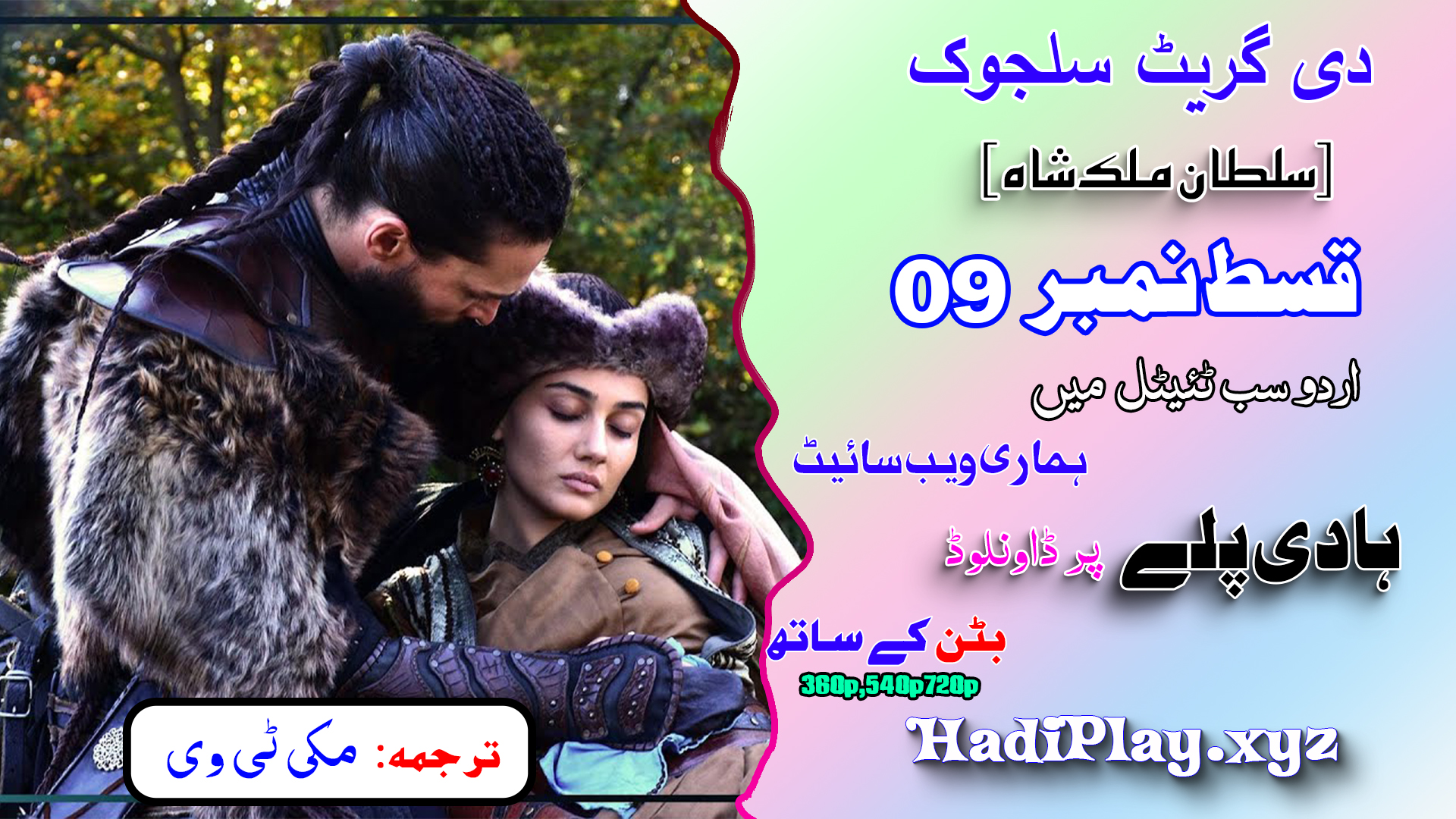
🗡️ The Mountain of Secrets: The Great Seljuk Episode 9—Sencer’s Infiltration and Sabbah’s Resilience 👑
The Great Seljuk (Uyanış: Büyük Selçuklu) Episode 9 marks the critical turning point in the siege of Alamut Castle, transitioning the conflict from mass military confrontation to precise, high-stakes covert action. Recognizing that the mountain fortress is impregnable to conventional siege tactics, Vizier Nizam al-Mulk and Sultan Melikşah turn to their most trusted and uniquely skilled commander, Sencer. This episode is defined by Sencer’s daring infiltration of Alamut, placing the hidden prince face-to-face with the network of Hasan Sabbah. The narrative expertly details the immediate dangers and psychological traps set by Sabbah’s fanatical forces.
This pivotal chapter demands absolute clarity due to its complex espionage sequences and rapid tactical shifts. The Urdu Subtitles (provided by dedicated groups like Hadi Play) are fundamentally crucial, translating the specialized infiltration codes, Sabbah’s manipulative sermons, and the tense political demands from the capital.
Part I: From Siege to Shadow War – The Infiltration Strategy ⚔️
Episode 9 opens with the stark realization by the Seljuk command that the siege of Alamut is stalled. The fortress’s natural defenses and effective resistance have rendered massive siege engines ineffective, forcing a dramatic change in strategy.
The Vizier’s Unconventional Plan
- Abandoning Convention: Vizier Nizam al-Mulk (along with Sencer) convinces Sultan Melikşah to abandon the traditional, costly, and demoralizing massed siege. The new strategy focuses on covert action, intelligence gathering, and creating internal instability within the fortress.
- Sencer’s Mandate:Sencer is formally given the most dangerous and critical mission: infiltrate Alamut Castle. His objectives are multi-faceted:
- Reconnaissance: Map the fortress’s hidden weaknesses (water supply, inner layout, armament locations).
- Sabotage: Disrupt key supplies or communication lines.
- Intelligence: Gather irrefutable evidence of Sabbah’s external support (links to Byzantines or rival Beys).
- The Logistical Deception: The rest of the Seljuk army maintains a deceptive perimeter, continuing superficial siege actions to convince Hasan Sabbah that the conventional attack is still underway, thus concealing Sencer’s shadow operation.
The Infiltration Method
The episode details Sencer’s challenging entry into Alamut, often relying on a secret path, a compromised supply line, or a highly elaborate disguise.
- Sabbah’s Security: Alamut is depicted as an intellectual and physical fortress. Sabbah’s security is based on paranoia and fanatical loyalty, making traditional infiltration nearly impossible. Sencer must outwit not only guards but also intellectual traps.
- The Emotional Cost: Sencer is acutely aware that if he is captured, the immense secret of his royal lineage could be tortured out of him, potentially leading to immediate dynastic civil war. This knowledge adds profound psychological weight to every move.
Part II: Inside Alamut – Sabbah’s Cult of Fanaticism 🗡️
Sencer’s infiltration provides the audience with its first detailed, terrifying look inside the Batiniyya fortress, confirming the extent of Sabbah’s ideological warfare.
The Ideological Prison
Alamut is shown to be more than a fortress—it is an ideological prison where Sabbah maintains absolute control through indoctrination and manufactured loyalty.
- The Sermon of the Serpent: Hasan Sabbah is featured delivering a powerful, manipulative sermon to his followers, reinforcing the heretical belief that their actions are divinely sanctioned and that Jannah (Paradise) awaits those who die in his service. Sencer, in disguise, is forced to witness this fanaticism firsthand. The Urdu Subtitles are essential for accurately translating the persuasive, complex, and corrupt philosophical arguments used by Sabbah.
- Psychological Traps: Sabbah is shown using intricate psychological traps to test new arrivals or trusted guards, ensuring absolute loyalty. Sencer must use all his discipline to blend in, avoiding eye contact and adopting the appropriate demeanor of a fanatical follower.
Sencer’s Encounter with the Inner Circle
Sencer’s mission forces him into contact with key operatives—Sabbah’s lieutenants—who manage the fortress’s logistics and communications.
- Targeting Weaknesses: Sencer focuses on mapping the key weaknesses: the water cistern, the armory, or the communication routes used by Sabbah’s external agents. He may successfully manage a minor act of sabotage, such as contaminating a minor supply or intercepting a coded message.
- The Fateful Captive: Sencer may discover a crucial Seljuk captive within Alamut—perhaps an important noble or a scholar kidnapped in a previous episode. The moral imperative to save this captive immediately conflicts with the operational mandate of gathering intelligence, forcing Sencer into a difficult ethical choice.
Part III: The Pressure on Melikşah and Terken Hatun’s Move 👑
The lack of immediate success in the Alamut siege reignites the political turmoil in Isfahan, forcing Sultan Melikşah to manage the political fallout.
Terken Hatun’s Calculated Criticism
Terken Hatun, seizing on the stalled siege, launches a fierce public attack on Vizier Nizam al-Mulk’s strategy.
- The Cost of Failure: She leverages the immense, visible cost of the siege (money, men, supplies) against the lack of immediate victory. She argues that the Vizier’s “slow, bureaucratic method” is a failure and that the resources should be diverted to projects that benefit her allied Beys. This is a direct challenge to the Vizier’s competence.
- The Political Demand: Terken Hatun and her coalition pressure Melikşah to recall the army or replace Nizam al-Mulk with a commander who promises a quick, though potentially suicidal, victory.
Melikşah’s Defense and Justification
Sultan Melikşah must publicly defend the new, unconventional strategy, knowing that the empire’s future relies on Sencer’s shadow war.
- Trust in the Vizier: Melikşah publicly maintains faith in the Vizier, arguing that patience and meticulous planning are necessary against an enemy like Sabbah. However, the Sultan may send a high-ranking, skeptical general to observe the siege, further complicating Sencer’s mission.
- The Hidden Purpose: Melikşah’s private counsel with Nizam al-Mulk confirms the strategic necessity of the infiltration. They are buying time to learn the fortress’s true vulnerabilities—something only Sencer can provide.
Part IV: Cultural Context and Translation Imperatives 🌍
Episode 9’s complexity lies in its focus on deep espionage within a theological context.
The Critical Role of Urdu Subtitles
The Urdu Subtitles are absolutely vital for this infiltration-heavy episode:
- Decoding Sabbah’s Sermons: The translation of Hasan Sabbah’s manipulative rhetoric is crucial for conveying the ideological danger of the Batiniyya. The subtitles must accurately distinguish Sabbah’s heretical claims from orthodox Sunni beliefs.
- Espionage Terminology: The subtitles must clearly translate the specific commands and codes Sencer uses to communicate his findings back to the Seljuk camp without compromising the atmosphere of secrecy.
- Emotional Conflict: Sencer’s internal monologue and his emotional struggle to maintain the guise of a fanatic require seamless translation to maintain the audience’s profound sympathy for the hero.
Thematic Conclusion
Episode 9 concludes with Sencer having achieved his primary objective: obtaining critical intelligence from inside Alamut. However, he is now in immense personal danger. The episode ends on a high-tension cliffhanger, with Sencer’s identity possibly compromised, forcing him to engage in a desperate move to escape the ideological prison of Alamut.
Frequently Asked Questions (FAQs) about The Great Seljuk Episode 9:
| Question | Answer |
| Q1: What is the main strategic shift in the war against Sabbah in Episode 9? | A1: The Seljuks shift from a conventional, massed siege to a covert infiltration and shadow war, led by Sencer, due to the impregnability of Alamut Castle’s defenses. |
| Q2: What is Sencer’s primary mission objective inside Alamut? | A2: Sencer’s mission is deep reconnaissance—mapping the fortress’s hidden vulnerabilities (water, armory) and gathering intelligence on Sabbah’s internal organization and external allies. |
| Q3: How does Hasan Sabbah maintain control inside the fortress? | A3: Sabbah maintains control primarily through ideological indoctrination and psychological warfare, using powerful sermons and fanaticism to secure the absolute loyalty of his followers. |
| Q4: How does Terken Hatun use the siege to attack Nizam al-Mulk? | A4: She launches a fierce political attack, leveraging the immense cost and lack of immediate success of the stalled siege to demand the Vizier’s replacement and the recall of the army. |
| Q5: Why are the Urdu Subtitles essential for understanding Sencer’s infiltration? | A5: Subtitles are critical for accurately translating Sabbah’s sophisticated philosophical sermons and the specialized espionage codes Sencer uses to communicate his highly secret findings to the Seljuk command. |