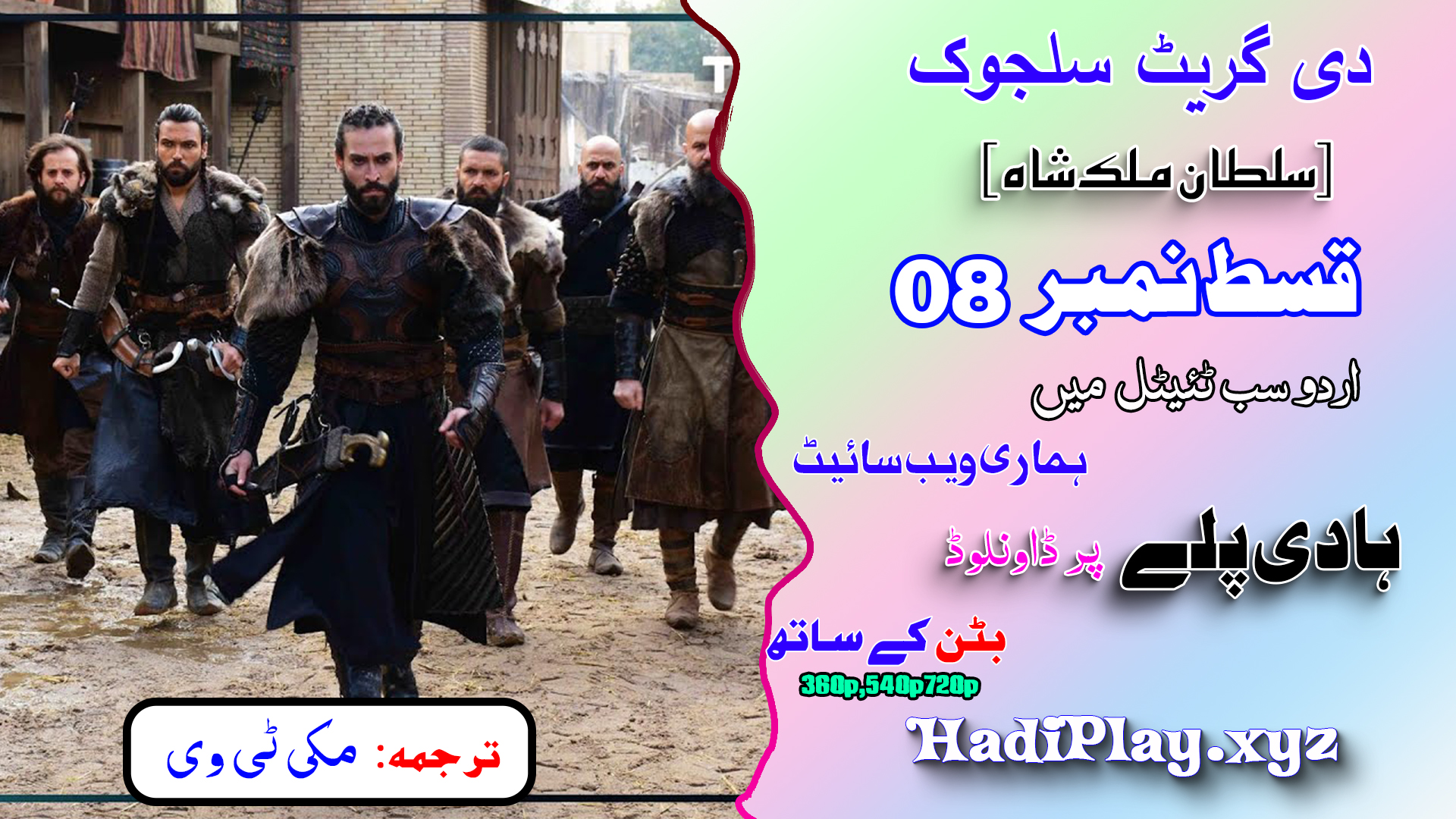
🏔️ The Shadow Campaign: The Great Seljuk Episode 8—The Siege of Alamut Commences and Sencer’s Field Command 👑
The Great Seljuk (Uyanış: Büyük Selçuklu) Episode 8 marks the definitive transition of the war against Hasan Sabbah from an internal police action to a large-scale, existential military confrontation. With the strategic groundwork laid in previous episodes, this installment details the official launch of the campaign against the seemingly impregnable Alamut Castle, the mountain fortress that now serves as the revolutionary center of the Batiniyya movement. Sencer, burdened by the secret of his royal lineage, is placed in a critical field command position where his loyalty and strategic genius are immediately tested by the fortress’s formidable defenses and Sabbah’s treacherous counter-intelligence.
This episode is dominated by complex military logistics, tense siege strategy, and the psychological warfare waged by Sabbah. The reliance on Urdu Subtitles (provided by dedicated groups like Hadi Play) is fundamentally crucial, translating the technical siege terminology, military command structures, and Sabbah’s mocking propaganda that targets the morale of the Seljuk army.
Part I: The Launch of the Siege – Logistics and Strategy ⚔️
Episode 8 begins with the monumental effort of mobilizing the vast Seljuk army for the remote, difficult terrain surrounding Alamut Castle. The initial phase focuses on the logistical complexity that defines this unique siege.
The Challenge of the Impregnable Fortress
- The Strategic Dilemma: Vizier Nizam al-Mulk briefs the Sultan Melikşah and the Divan on the unprecedented challenges. Alamut is a natural fortress, built high in the mountains of Daylam, making traditional massed assaults suicidal and supply lines agonizingly long. The siege will require not just soldiers, but massive investments in engineering, specialized siege weapons, and a year-round commitment of resources.
- Sencer’s Command: Sencer is formally assigned a crucial field command role, often as the chief reconnaissance or vanguard commander. His immediate task is not to attack, but to establish the perimeter, map the fortress’s weaknesses (access points, water sources, hidden paths), and determine the most viable points for launching siege engines. This placement is a deliberate move by Nizam al-Mulk to provide Sencer with command experience and military legitimacy.
- The Logistical Nightmare: The episode emphasizes the severe difficulty of maintaining the supply line. Terken Hatun’s previous political maneuvering to disrupt the treasury ensures that the army’s budget is tight, requiring Nizam al-Mulk to enforce strict fiscal discipline. The logistics of moving siege towers, food, and water into the remote mountain regions are shown to be a greater challenge than fighting the enemy itself.
Hasan Sabbah’s Psychological Warfare
Sabbah is aware of the army’s arrival and immediately initiates a sophisticated psychological campaign to break the Seljuk morale before the first arrow is fired.
- Propaganda Targeting Morale: Sabbah’s agents or couriers launch highly effective propaganda and mockery aimed at the Seljuk common soldiers and the lower-ranking Beys. The messaging focuses on the alleged corruption of the court in Isfahan, contrasting the wealth of the Vizier with the hardship of the soldiers, and promises spiritual rewards (Jannah) to those who defect or reject the Sultan’s command.
- Targeting the Supply Line: The Batiniyya do not fight fair battles; they target the vulnerable supply convoys carrying food and ammunition, using small, highly mobile cells to sabotage the siege effort and spread fear among the non-military contractors.
Part II: Sencer’s Leadership Test and Moral Compromise 🗡️
Sencer’s command in Episode 8 tests his strategic ability against a new type of warfare and places immense pressure on his secret identity.
The Tactical Minefield
Sencer’s reconnaissance teams are immediately met with resistance designed by Sabbah to be strategically agonizing.
- The Trap: Sencer is lured into a skirmish that is secretly a Batiniyya trap—designed to draw out his forces into a bottleneck where they can be ambushed or eliminated by highly skilled Hashashin snipers. Sencer must rely on his superior field intelligence and intuition to recognize the trap before it springs, saving his men through decisive action.
- Sincerity and Deception: Sencer’s moral character is tested when he captures a Batiniyya operative. Unlike a simple brigand, the operative is a fanatic willing to sacrifice himself. Sencer must use calculated psychological pressure and espionage techniques to extract intelligence about Alamut’s inner workings, showcasing a necessary ruthless side that contrasts with his inherent Adalet.
The Burden of the Secret
The physical stress of the campaign exacerbates Sencer’s emotional burden of maintaining the royal secret.
- Avoiding the Familiar: Sencer must constantly guard his behavior around senior commanders and the Atabey (Prince’s tutor/regent) who may have known his mother, Başulu Hatun, or served Sultan Melikşah in his youth. Any slip-up—a memory triggered, a familiar gesture—could expose his identity.
- Communication Risk: Sencer’s coded communication with Vizier Nizam al-Mulk becomes fraught with risk. The message couriers or the method of encoding is often compromised or intercepted by Terken Hatun’s remaining spies, who are still monitoring the Vizier for any evidence of treason.
Part III: Terken Hatun’s Backdoor Politics and Dynastic Threat 👑
Even with the war raging on the frontier, Terken Hatun (Sultan Melikşah’s influential wife) continues her relentless political campaign against the Vizier and any rising threats to her son’s succession.
The Financial Sabotage
Terken Hatun utilizes the genuine logistical difficulties of the Alamut campaign to launch a sophisticated attack on Nizam al-Mulk’s competence.
- Targeting the Budget: She gathers her political allies in the Divan to raise public and political alarm over the immense, ongoing cost of the Alamut siege. They argue that the resources are being wasted on an impossible fortress, funds that could be better used to defend the Anatolian border (which is the area of interest for her family’s tribal allies).
- The Sultan’s Doubt: Terken Hatun plants seeds of doubt in Sultan Melikşah’s mind, suggesting that Nizam al-Mulk is either incapable of managing the vast logistics or is intentionally prolonging the war for his own political gain. The Sultan, though trusting of the Vizier, is forced to send observers or auditors to the siege camp, which further complicates Sencer’s covert operations.
The Rival Prince Factor
Episode 8 reinforces the threat posed by the existing, official princes (Melikşah’s legitimate sons).
- Envy of Sencer: The Princes—unaware of Sencer’s royal lineage—are highly envious of his sudden rise to a critical command position. They may attempt to discredit Sencer through military disobedience or by fabricating reports of his failures, actions that Terken Hatun readily encourages to protect her son’s future claim to the throne.
Part IV: Cultural Context and Translation Imperatives 🌍
The successful conveyance of the intense military planning and court protocol relies heavily on accurate localization.
The Critical Role of Urdu Subtitles
The Urdu Subtitles are indispensable in this episode:
- Siege Terminology: The accurate translation of engineering terms, siege weapons, and military classifications (like Mangonel, Catapult, Vanguard) is vital for the audience to follow the technical execution of the siege strategy against the complex mountain fortress.
- Psychological Warfare: The subtitles must clearly translate Hasan Sabbah’s mocking propaganda and ideological messages aimed at the Seljuk troops, ensuring the audience understands the psychological dimension of the conflict.
- Court Protocol and Subtext: The formal language used by the auditors and observers sent from the capital must be precisely translated to convey the subtle political maneuvers of Terken Hatun, who is attempting to sabotage the campaign from afar.
Frequently Asked Questions (FAQs) about The Great Seljuk Episode 8:
| Question | Answer |
| Q1: What is the primary focus of the military operation in Episode 8? | A1: The primary focus is the official launch of the siege campaign against Alamut Castle, the mountain fortress serving as the central stronghold for Hasan Sabbah’s Batiniyya network. |
| Q2: What is the main logistical challenge facing the Seljuk army at Alamut? | A2: The main challenge is the logistical nightmare of supplying a large army and moving massive siege engines into the remote, difficult mountain terrain of Daylam for a protracted siege. |
| Q3: How does Hasan Sabbah wage war against the Seljuks in this episode? | A3: Sabbah uses psychological warfare and sabotage, targeting vulnerable supply convoys and launching propaganda to break the Seljuk army’s morale and turn soldiers against the court in Isfahan. |
| Q4: How does Terken Hatun continue her attack on the Vizier? | A4: She launches a fiscal attack on the siege budget, raising political alarm over the immense cost of the “impossible” Alamut siege to discredit Nizam al-Mulk’s administrative competence. |
| Q5: What is Sencer’s critical role in the initial phase of the siege? | A5: Sencer is assigned a crucial field command role as the chief reconnaissance and vanguard commander, responsible for establishing the perimeter, mapping the fortress’s weaknesses, and preventing Hashashin ambushes. |